God’s word is not chained.

“Remember Jesus Christ, raised from the dead, descended from David. This is my gospel, for which I am suffering even to the point of being chained like a criminal. But God’s word is not chained. Therefore I endure everything for the sake of the elect, that they too may obtain the salvation that is in Christ Jesus, with eternal glory” (2 Timothy 2:8-10).

Christmas is a centuries old celebration of the birth of Jesus Christ, descended from David, the fulfillment of Old Testament prophecy. Immanuel, God with us, more than man, God, the Son of God, in the flesh, this is the claim of the gospel of Christ. Max Lucado describes the wonder and awe of God with us. “The omnipotent, in one instant, made himself breakable. He who had been spirit became pierceable. He who was larger than the universe became an embryo. And he who sustains the world with a word chose to be dependent upon the nourishment of a young girl” (God Came Near, 25).

The Son of God came among us to give himself in the inconceivable surrender of his life in death on a Roman cross. More inconceivable is that in his death he took upon himself the sins of humankind. “Remember Jesus Christ, raised from the dead.” His resurrection was the powerful declaration of his identity as the Son of God (Romans 1:3-4). The resurrection of Jesus Christ from the dead is the source and the assurance of justification, forgiveness, salvation, and hope for those who place their faith in him. “He was delivered over to death for our sins and was raised to life for our justification” (Romans 4:25). “By his power God raised the Lord from the dead, and he will raise us also” (1 Corinthians 6:14). 

When the apostle Paul wrote his second letter to Timothy, Paul was a prisoner, in chains for the sake of the gospel of Christ he preached. Note his words, “but God’s word is not chained.” As I read this the other week my thoughts went to my grandson Sully who died at the age of fifteen months after a thirteen month fight with leukemia. I also thought of all the other children who have died from and who are suffering and battling pediatric cancers. (Today, December 15, 2012, my thoughts are also with the children who were violently murdered yesterday in Newtown, CT, and the children who went through the horror and survived. My thoughts are with the parents, siblings, grandparents, all family members and friends. My eyes and heart have filled with tears more than once this morning.)

Pediatric cancers chain the children with suffering. Parents, siblings, grandparents, are chained by the desperate hopelessness of watching and being unable to relieve the suffering, unable to stop the dying. The chains of suffering, of tragedy, of grief, of hopelessness, whatever the cause, harshly imprison the body and the soul. “But God’s word is not chained.” The chains of suffering and oppression, whatever the cause, cannot chain God’s word. The hope and reality of salvation and eternal glory that is in Christ Jesus cannot be chained. Death itself cannot chain the hope that is in Christ Jesus.

While the present chains seek to destroy hope, the word of the gospel of our Lord and Savior Jesus Christ break the chains binding our hearts and souls. The physical chains might not be broken, but the heart and soul are freed in Christ to hold confidently to the hope which is in our Lord and Savior Jesus Christ, raised from the dead, descended from David. “Here is a trustworthy saying: If we died with him, we will also live with him; if we endure, we will also reign with him…he will remain faithful” (2 Timothy 2:11-13).

(This post, with very slight revision I first posted this morning at http://www.caringbridge.org/visit/sullivanbubbyfarrar. This site is in memory of my grandson. I have posted there a number of pictures from Sully’s only Christmas in 2007.)

Posted in Christmas, God, Grace, Hope, Resurrection, Salvation, Suffering and Faith | Leave a comment

Christians Only

“Simon Peter replied, ‘You are the Christ, the Son of the living God.’ And Jesus answered him,…‘And I tell you, you are Peter, and on this rock I will build my church, and the gates of hell shall not prevail against it’” (Matthew 16:16-18).

God’s eternal purpose in Christ is to create a new humanity. In relationship to God humankind is fallen, alienated from God. In its fallenness humankind is divided, experiencing alienation within itself. Hatred, misunderstanding, prejudice, selfishness, racism, nationalism, religion, unbelief, materialism, power, and more stir the fires of hostility within humankind.

By his death on the cross Christ has created a new humanity. Christ tore down the walls of hostility. Scripture describes God’s new humanity created in Christ as the body of Christ, the people of God, the temple of God, God’s holy nation, the church. Within this new humanity people are brought to peace with God as they are brought to peace with one another as one body, one people, a new united and loving humanity, the kingdom of God. Within the darkness of the hostility within the world, the church is to shine the light of Christ as the body of Christ, the people of God, where God’s purpose in Christ is being accomplished. (Cf. Ephesians 1-4, especially chapter 2)

The above is what I understand Scripture to teach. This is the reality in the heart and purpose of God and his Christ. The Father, Son, and Holy Spirit do accomplish their purpose. History, past and present, however, presents the picture of Christians failing “to maintain the unity of the Spirit in the bond of peace” (Ephesians 4:3). Over the centuries people wearing the name of Christ have divided over doctrine, nationalism, racism, and a countless number of misguided reasons to build walls of division. Sadly, often the walls of division and hostility have been forcefully built in the name of Christ.

There have been those movements throughout the history of Christianity the purpose of which, at least the founding purpose, has been to restore unity to the church, to the body of Christ. The modern ecumenical movement has been one such movement. The purpose of this movement has been to seek unity and cooperation between the various denominations and branches of Christianity while maintaining the diversity and distinctiveness of those groups.

The American Restoration Movement, as it is identified by those whose roots go back to this movement of the eighteenth and nineteenth centuries, had as its original purpose the uniting of all Christians into one body, one church. The call was made for all Christians to come out from the denominations of Christianity and their diverse creeds, uniting together as one body, one church, with the Scriptures, the New Testament in particular, as the only creed. The early motivation of the Restoration Movement was evangelistic and eschatological. Fueled by the settlement of the “new world” and the American Revolution optimism and hope filled the hearts of men. This optimism and hope gave leaders of the restoration movement a vision of the spread of Christianity over the entire world. The golden age of the millennium seemed on the horizon. To conquer the world with the gospel of Jesus Christ, it was believed, was not possible by disciples militantly divided. The unity of all disciples of Christ in one church, one body, built on the foundation of the apostles and prophets, Jesus Christ as the chief corner stone, was believed vital to this purpose. This unity was not to be a unity within the diversity of the many denominations, of the many bodies. Rather the unity called for within Scripture, one body. This movement is the historical heritage of churches of Christ, Independent Christian churches, and the Disciples of Christ.

Here we are, the year of our Lord, two thousand and twelve, and Christianity is still divided into various sects, denominations, and various other groups however identified. Within this reality, I ask, is the church of our Lord, that which Jesus created in his death, by his Spirit, and by his reign as Lord of lords, is the church the sum of all the denominations? As one who is a member and minister within the churches of Christ, I ask, is the church of our Lord solely and completely the churches of Christ? My understanding is that the church is not the sum of all the denominations. Nor is it solely and completely the churches of Christ. I will do my best to briefly explain.

“For in one Spirit we were all baptized into one body–Jews or Greeks, slaves or free–and all were made to drink of one Spirit” (1 Corinthians 12:13). “For in Christ Jesus you are all sons of God, through faith. For as many of you as were baptized into Christ have put on Christ. There is neither Jew nor Greek, there is neither slave nor free, there is no male and female, for you are all one in Christ Jesus” (Galatians 3:26-28).

The church, the body of Christ, the people of God, is all who have positively responded to the calling of God through the gospel of Christ. The church is all who responded to the gospel of Christ with faith in Jesus Christ and were baptized, immersed, into Christ. (For my understanding of the teaching of Scripture concerning baptism see these two earlier posts: Just How Important Is Baptism Anyway? and The Unimmersed and Others.)

The question typically asked within churches of Christ of ourselves and of others is this, how do you identify the church, the true church? I believe the basic biblical answer is the church is the saved, Christians, disciples of Christ, all who have come to Christ in faith and were united with Christ in baptism (1 Corinthians 12:13; Galatians 3:26-28). Other vital identifying marks of the true church, of true disciples of Christ, are love like the love of Christ (John 13:34-35) and transformed lives (Ephesians 4:1-6, 20-24).

The generally stated goal of churches of Christ is to be simply Christians, Christians only. This is our goal as a people who have come to Christ in faith and have yielded our lives to Christ as in faith we died with him and were raised with him as we were baptized into Christ. The desire of our forefathers, with which I agree, is not to be another denomination among denominations. Though from one perspective we are.

The churches of Christ is a distinct group with a distinct name (though a name found in Scripture, one name out of many was chosen to distinguish this body of believers). There are distinct practices which distinguish the churches of Christ from other groups. However biblical those distinctive practices may be, they still serve to denominate us. These practices define our identity in comparison to other groups in the Christian world. There is always the danger of being sectarian by drawing a circle around ourselves, around all our distinctive beliefs and practices, claiming to be the only Christians. If you are not in our circle, at worst you are not a Christian, at least you are not a faithful Christian and spiritually at risk. That circle can become smaller and smaller. There are subgroups within churches of Christ who have drawn an increasingly smaller circle.

If you were to ask me if the local church of Christ of which I am a member is the church of Christ, the church as it is depicted in Scripture, my answer is yes. Why? Because we do a whole list of church things (style of worship, organization, name, etc.) correctly, biblically? No. Rather I answer yes because of our identity in Jesus Christ. We are a church, a body of God’s people, who have come to Christ in faith and have yielded our lives to Christ as in faith we died with him and were raised with him to life as we were baptized into Christ. As a local body of Christians, yes, we are the church of Christ, the church of God, the body of Christ, the temple of God, for that is what Christ has made us. As a local body of God’s people our determination and effort is to be Christians only. We want to be identified, known, as God’s people because of our faith in Jesus Christ, our love for one another, and the godly and holy lives we live collectively and individually. As God’s people we want in all things to be obedient to God in Jesus Christ. Note 1 John 3:23-24. “And this is his command: to believe in the name of his Son, Jesus Christ, and to love one another as he commanded us. Those who obey his commands live in him, and he in them. And this is how we know that he lives in us: We know it by the Spirit he gave us.”

 
Posted in Church, Fellowship, Kingdom of God, People of God, Reconciliation, Salvation | 1 Comment

The Kingdom of God, Part Two, Living in the Kingdom

In Sand and Foam the Lebanese poet and philosopher Kahlil Gibran wrote, “Should you sit upon a cloud you would not see the boundary line between one country and another, nor the boundary stone between a farm and a farm. It is a pity you cannot sit upon a cloud” (81).

“And in the days of those kings the God of heaven will set up a kingdom that shall never be destroyed, nor shall the kingdom be left to another people. It shall break in pieces all these kingdoms and bring them to an end, and it shall stand forever” (Daniel 2:44, read context, 2:26-47).

In Jesus Christ the kingdom of God broke forth into this world. The boundary lines separating nations and the boundary stones separating farms are being removed one heart, one person at a time. In Christ the boundaries which breed hostility are removed. In Christ the nations become one nation, the races one race, the peoples one people. The kingdoms become one kingdom in Christ. The apostle John saw a vision of the Lamb of God, the crucified and risen Christ at the right hand of God. It was said of him, “behold, the Lion of the tribe of Judah, the Root of David, has conquered” (Revelation 5:5). Those before the thrown bowed down before him. “And they sang a new song, saying, ‘Worthy are you to take the scroll and to open its seals, for you were slain, and by your blood you ransomed people for God from every tribe and language and people and nation, and you have made them a kingdom and priests to our God, and they shall reign on the earth’” (Revelation 5:9-10

What is the impact of the kingdom on the hearts and lives of its citizens? How are the people of God to live within his kingdom?

The first point about living in the kingdom of God is a central point I hopefully made in writing about the church as the people of God and the body of Christ. The citizens of the kingdom of God, Christians, are one kingdom under one King, one nation, one people. In the world there are so many boundaries which breed hostilities. Those boundaries were nailed to the cross in Jesus Christ. The citizenship is composed of every nationality, race, and people who have been nationalized by Jesus Christ and the Spirit. They are to live together in peace, the peace which comes through the death of Jesus Christ, through his message, and through his Spirit. The citizens of the kingdom of God are to be accepting of each other as Christ has accepted them. They are to welcome each other as Christ welcomes them. Their loyalty, faithfulness, and love for their King is to flow through their hearts and lives to one another. “Accept one another, then, just as Christ accepted you, in order to bring praise to God (Romans 15:7 NIV84). (See Romans 12:3-5; 1 Corinthians 12; Galatians 3:26-29; Ephesians 2:11-22; Colossians 3:11-15.)

The church has not always glorified God in this matter of accepting one another as Christ accepts them, in accepting each other not as Jew or Greek, slave or free, but as brothers and sisters in Christ, as one race, one people. The prejudices, boundaries, and hostilities of the world have often invaded the church. What Christ destroyed in his death on the cross Christians have ripped from the cross and followed the world instead of Christ. Usually the Scriptures are twisted to rationalize such unChristlike attitudes and behavior. The truth of the kingdom of God and the life the citizens of the kingdom are to live in relationship to each other is not negated by the failures of the church over the centuries. Christ our King continues to command and challenge us to live in attitude and behavior as fellow citizens, one people, treating one another, loving one another, as we are treated and loved by Christ. “For the kingdom of God is…a matter…of righteousness and peace and joy in the Holy Spirit” (Romans 14:17).

In contrast to those who are enemies of the cross of Christ whose minds are on earthly things, “our citizenship is in heaven, and from it we await a Savior, the Lord Jesus Christ” (Philippians 3:20). A second point about living in the kingdom of God is that we are to live in loyal and faithful obedience to the King. Our allegiance is to our King and to the peace of his kingdom.

A third point about living in the kingdom of Christ is that we are to proclaim the excellencies, the praises, of our King (1 Peter 2:9). Certainly the truth of God and of the gospel of Jesus Christ are to be proclaimed. That truth and message are also to be proclaimed by the lives we live. Christians, as citizens of the kingdom of God, are sojourners and exiles in the world. We are green card carrying aliens. We are to live as citizens of the kingdom of God for which we are ambassadors in a foreign land. “Beloved, I urge you as sojourners and exiles to abstain from the passions of the flesh, which wage war against your soul. Keep your conduct among the Gentiles honorable, so that when they speak against you as evildoers, they may see your good deeds and glorify God on the day of visitation” (1 Peter 2:11-12).

Fourth, the people of God as citizens of the kingdom of God are a royal priesthood, the priests of the King (1 Peter 2:9; Revelation 1:6; 5:10). Our lives are to be lives of worship, bowing in reverence before the King, lifting up his name in praise. Worship of the King is not only to be the praise rising from the heart and flowing over our lips. Worship of the King is to flow out of the heart into the lives we live. We are to live with hearts and bodies, everything about us, every word, every thought, every deed, surrendered in undying loyalty to the King.

Fifth, as an outpost of the kingdom, the body of Christ, which is the church, the people of God are pioneers living in a lawless frontier as citizens of the kingdom of God. We are to live in the righteousness of the rule, power, and sovereignty of the King. Our King has taught us “to put off your old self, which belongs to your former manner of life and is corrupt through deceitful desires, and to be renewed in the spirit of your minds, and to put on the new self, created after the likeness of God in true righteousness and holiness” (Ephesians 4:22-24).

To live in the kingdom of Christ is to know the redemption, the forgiveness of sins, which God gives through the blood of his Son Jesus Christ (Revelation 1:5-6; Colossians 1:13-14). To be in the kingdom of Christ is to know the blessings of the power and the protection of the King Jesus Christ. His power, rule, and sovereignty is over all things, all powers, and all authorities, for the good, the well-being, of his people (Ephesians 1:18-23).

To live in the kingdom of God is to live with assurance and hope.We look around us, read the news, watch the news, it certainly appears evil, Satan, is the supreme power. Scripture is emphatic. God is the supreme power. God reigns. The risen Christ has been enthroned. He reigns over the kings of the earth and all power and authority. Evil, Satan, has been defeated on the cross, in the empty tomb, and in God’s exaltation of Jesus Christ as King of kings, and Lord of lords. God’s people put on the armor of God, fight against evil in their lives, in the lives of others, and the community around them. Fighting, not with the weapons of this world, but with the weapons God supplies in Jesus Christ and in his Spirit, God’s people press on, strengthened by the assurance of the victory of Christ on the cross, in the tomb, and now on the throne. God’s people press on in the hope of the fullness of Christ’s victory when Christ comes again. They live in the hope of the consummation of the kingdom of God when Christ returns. then every knee will bow and all will acknowledge Christ as supreme and God as king over all.

Speaking of the present and of what is yet to come, the apostle Paul encourages the Thessalonian Christians so long ago and Christians today. “We exhorted each one of you and encouraged you and charged you to walk in a manner worthy of God, who calls you into his own kingdom and glory” (1 Thessalonians 2:12).

Posted in Church, Fellowship, Kingdom of God, People of God, Reconciliation | Leave a comment

The Kingdom of God, Part One

Kings and kingdoms is stuff of books, movies, fairy tales, history, and foreign lands. The reality and experience in the United States is that of presidents and elections in a republic. The reality and experience of ancient Israel and the world of the Roman Empire which the early church knew was kings and kingdoms. Therefore this is the language used in a significant and central metaphor in Scripture to reveal God’s relationship to creation, to humankind, and to his people.

As Creator, God by right is king over his creation. The rule, power, and sovereignty over creation are God’s. “In principle the entire universe constitutes the realm over which God exercises kingship.” All of creation is his kingdom. However, “God has given humans the privilege and responsibility of acknowledging his rule,” of yielding themselves to God in faith and obedience. What happened? What continues to happen? Humankind rejected and continues to reject the kingship of the Creator. So the earth has become home to a rebellion. One who has no right to kingship, no right to rule, appears to rule as humankind chooses to reject God and to follow this illegitimate ruler, Satan.

The story of Scripture is the story of God’s love for his creation. It is the story of God’s love for his kingdom. Scripture reveals God working to transform hearts and bring people to faith in him. God’s purpose is to cause people to acknowledgement of God, to willingly submit to his kingship. His desire is to bring people out of rebellion into his kingdom.

The focus of this story is Jesus Christ. Jesus came testifying to the claim of God’s kingship. Jesus embodied the kingdom of God. The life, death, and resurrection of Jesus demonstrate God’s claim to kingship. God exalted Christ to God’s right hand as King and Lord over all. In Christ God’s kingship, his kingdom, is proclaimed. Through Christ, through his gospel, people are called to forsake the false ruler, Satan, to throw off the chains of servitude to him. We are called to confess Jesus as Lord, acknowledging God as real, as true, as alive, and as the rule, power, and sovereignty over creation, and over our lives. With that confession and the yielding of heart, mind, spirit, and body to Christ, God by his grace brings believers into his kingdom to live under his rule, power, and sovereignty. (The quotes and the direction of this and the above paragraphs are from Stanley J. Grenz, Theology for the Community of God, 475-6.)

“[God the Father] has delivered us [who have placed faith in Jesus Christ] from the domain of darkness and transferred us to the kingdom of his beloved Son, in whom we have redemption, the forgiveness of sins” (Colossians 1:13-14).

“And from Jesus Christ the faithful witness, the firstborn of the dead, and the ruler of kings on earth. To him who loves us [Christians] and has freed us from our sins by his blood and made us a kingdom, priests to his God and Father, to him be glory and dominion forever and ever” (Revelation 1:5-6).

Being God’s people and the body of Christ, Christians are in the kingdom of God and of Christ. The church can rightly be identified as the kingdom of God, as the kingdom of Christ. Not that the church is the whole of the kingdom. The kingship of Christ, his rule, his power, his sovereignty, his kingdom is over all creation. The apostle Paul speaks of the great and immeasurable power of God “that he worked in Christ when he raised him from the dead and seated him at his right hand in the heavenly places, far above all rule and authority and power and dominion, and above every name that is named, not only in this age but also in the one to come. And he put all things under his feet and gave him as head over all things to the church” (Ephesians 1:20-22).

Within this broad concept of the kingdom of Christ and of God, there is the earthly manifestation of his kingdom, the realm of people over which he rules. Those people are those who have confessed Christ as Lord. They have yielded their lives in faith and obedience to the kingship of Christ and of God. These are the people of God, the body of Christ, the church. Christ has freed them from their sins and made them a kingdom of his God and Father. God, the Father, has delivered them from the domain of darkness and transferred them to the kingdom of his beloved Son, Jesus Christ.

Through his life, death, and resurrection, Jesus defeated the false ruler, the leader of those in rebellion. Jesus now reigns at the right hand of God, above all rule, authority, power, and dominion. Satan, however, will fight until the very last, even through he knows he has lost. The people of God find themselves still living in the midst of a world in rebellion against God. In the midst of this darkness the body of Christ is that people who have accepted the true king, the almighty God and the Lord Jesus Christ. The church is the people who live in loyalty to the kingship of Christ, who have become by the grace of God the kingdom of Christ and of God. In the darkness which still envelops humankind and God’s creation, the people of God are an outpost of Christ’s kingdom of light. Christians are “a chosen race…a holy nation” (1 Peter 2:9). As God’s chosen, as God’s holy nation or kingdom, the purpose of God’s people is to “proclaim the excellencies of him who called you out of darkness into his marvelous light” (1 Peter 2:9). 

I close Part One with a lengthy quote from Stanley Grenz, Theology for the Community of God (476)–

“Although the kingdom is here, this presence is partial and not yet consummated. For this reason there remains a future, eschatological aspect of the kingdom. One day all persons will acknowledge the lordship of Jesus (Phil. 2:10-11). Likewise one day the principles of God’s kingdom will be universally actualized in the new human society that God will inaugurate. At that time, what is God’s by right (de jure) will also be true in the fact (de facto). The entire universe will be the realm of God’s rule.

“In short, the kingdom of God is both present and future. On the one hand, the divine reign is related to Christ’s first advent. It is a reality that people can enter (Mark 9:47; Matt. 21:31-32), for it is the kingly power of God. Hence, the kingdom is a ‘sphere of existence’ in which people are called to live. It is an incorporation into God’s powerful invasion of our world. As such it consists in doing the will of God (Matt. 6:10; 7:21-23), and it demands a radical decision (13:44-46). To enter the kingdom means to participate in ‘the already inaugurated explosion of God’s power into the world,’…

“On the other hand, the consummation of the divine reign awaits the glory surrounding Christ’s second advent. One day all creation will be brought into conformity with the divine intent. Only then will the kingdoms of this world truly become the kingdom of God and God’s will truly be done on earth as it is in heaven.”

Therefore God has highly exalted him and bestowed on him the name that is above every name, so that at the name of Jesus every knee should bow, in heaven and on earth and under the earth, and every tongue confess that Jesus Christ is Lord, to the glory of God the Father” (Philippians 2:9-11).

Posted in Church, Fellowship, Kingdom of God, People of God, Reconciliation, Salvation | Leave a comment

The Body of Christ, Part Two

With the metaphor of the human body the apostle Paul paints a picture of the church as the body of Christ. Like the human body there are many individual members, yet one body, united in Christ Jesus.

The Scriptures quoted in part one are from Ephesians, Colossians, Romans, and 1 Corinthians. These texts and the contexts of each teach us that we have oneness with Christ and peace with God within the body of Christ. We are also taught the many members of the body of Christ are united with one another in Christ through his death on the cross, through his blood shed, and through the Holy Spirit. Within his one body our Lord Jesus Christ reconciles us to God as he reconciles us to one another. For peace Jesus died, to bring us to peace with God and peace with one another. Central to our relationship with God and with Christ, central to the Holy Spirit’s presence in our lives as God’s people, is the relationship we have with each other in Jesus Christ. To be united to Christ is to be united to all believers.

“And let the peace of Christ rule in your hearts, to which indeed you were called in one body. And be thankful” (Colossians 3:15). “Your” and “you” are plural pronouns here. The peace of Christ is the peace he has given to his people, peace with God and peace with one another. The peace of Christ unites us with God as Christ unites us with each other.

Christ’s “purpose was to create in himself one new man out of the two, thus making peace, and in this one body to reconcile both of them to God through the cross, by which he put to death their hostility….For through him we both have access to the Father by one Spirit” (Ephesians 2:15b-16, 18 NIV84).

In Romans 12 and1 Corinthians 12-14 the lesson of this metaphor of the body is that of our unity together with God in one body. Members together of the body of Christ we are to mutually respect, accept, and care for one another. Each member of the body is important to the whole body, to the body’s health and function. No member is inferior. No member is superior. There is no excuse for conceit. The focus of life together in Christ, in his body, is to build up the body, to strengthen it by strengthening and encouraging one another. (cf. Everett Ferguson, The Church of Christ, 102)

God’s purpose in Christ Jesus is to bring together a people, to create a body, in which the saved, the children of God, are united with each other as they are united with God in Christ. The members of the body have the responsibility toward one another to love as Christ loves them.

The eternal purpose of God was that in Christ Jesus the church, the body of Christ, is to be the witness of God. This witness is to the wisdom of God in the reconciling work of Christ as he brings people to peace with one another in the body of Christ. In Christ the walls of hostility are torn down in his death on the cross. The hostility is replaced by the peace of Christ and the oneness we have together with God by the Holy Spirit through Christ.

Jesus prayed, the night before his sacrificial death, “I do not ask for these only [the apostles], but also for those who will believe in me through their word. That they may all be one, just as you, Father, are in me, and I in you, that they also may be in us, so that the world may believe that you have sent me” (John 17:20-21).

To me, though I am the very least of all the saints,” the apostle Paul wrote, “this grace was given, to preach to the Gentiles the unsearchable riches of Christ, and to bring to light for everyone what is the plan of the mystery hidden for ages in God who created all things, so that through the church the manifold wisdom of God might now be made known to the rulers and authorities in the heavenly places. This was according to the eternal purpose that he has realized in Christ Jesus our Lord” (Ephesians 3:8-11).

God’s people often falter. Peace collapses or never takes hold. Unity is forsaken for division. The evidence is all around us, the hundreds of denominations of Christianity, within denominations and fellowships, within local churches. God’s eternal purpose has not changed. God has not revealed adjustments to his purpose. God’s eternal purpose in Christ Jesus is still reconciliation of a people with himself and with one another in the body of Christ, in Christ, with Christ. The Hatfields and McCoys, black and white, Jews and Arabs, Americans and Iranians, the list of hostilities goes on and on. Christ died to reconcile them in himself in one body, through his death, reconciled to one another and to God. Even when there are differences in understanding of things relating to faith, Christians are to accept one another in the peace of Christ (cf. Romans 14-15).

Peace, the responsibility of God’s people within the body of Christ is to nurture and eagerly maintain the peace they have been given in Christ.  The body of Christ, the many members must learn and grow in love for one another as Christ loved and loves them. Peace is not a choice. Acceptance of one another as fellow members of the body of Christ is not optional. Peace with God comes through peace with one another in Christ.

“Walk in a manner worthy of the calling to which you have been called, with all humility and gentleness, with patience, bearing with one another in love, eager to maintain the unity of the Spirit in the bond of peace” (Ephesians 4:1-3).

“A new commandment I give to you, that you love one another: just as I have loved you, you also are to love one another. By this all people will know that you are my disciples, if you have love for one another” (John 13:34-35). This, Jesus said, is what identifies the body of Christ as his body. Love for one another as Christ’s love for them, this is to be the church’s witness of God, of our Lord and Savior Jesus Christ.


(Scripture quotes, unless noted otherwise, are from the English Standard Version.)

Posted in Church, Fellowship, God, People of God, Reconciliation, Salvation | Leave a comment

The Body of Christ, Part One

“Once you were not a people, but now you are God’s people, once you had not received mercy, but now you have received mercy” (1 Peter 2:10). In Jesus Christ God gathers a people to be his very own. They were not a people, people of different nations, races, and families. In Christ Jesus they are now one people, one nation, one race. They are bound together by a common heritage, a common calling, a common loyalty, united together in one God, in one Lord Jesus Christ, in the one Spirit of God.

Using the metaphor of the human body, the apostle Paul describes the people of God as one body composed of many diverse members. One body, the people of God are the body of Christ. “And he [God] put all things under his [Jesus Christ’s] feet and gave him as head over all things to the church, which is his body, the fullness of him who fills all in all” (Ephesians 1:22-23).

The human body, composed of many diverse parts, is one body. All the parts of the human body work together for the good of the whole. With the metaphor of the human body Paul paints a picture of the church, of the church’s unity.  There are many individual members, yet one body, united in Christ. Unity, not uniformity, rather there is diversity–in God-given abilities, in spiritual maturity, in familial background, in ethnicity and nationality, in social and economic standing, and in the struggles of life.  There are many diverse members but one body, united in Christ. Paul pictures the diverse people of God as one body in Christ, united and functioning as a whole for the good of each other, for the good of the whole.

“For as in one body we have many members, and the members do not all have the same function, so we, though many, are one body in Christ, and individually members one of another” (Romans 12:4-5). “For just as the body is one and has many members, and all the members of the body, though many, are one body, so it is with Christ. For in one Spirit we were all baptized into one body–Jews or Greeks, slaves or free–and all were made to drink of one Spirit. For the body does not consist of one member but of many. Now you are the body of Christ and individually members of it” (1 Corinthians 12:12-14, 27).

Notice the source of the body’s existence and unity. “So we, though many, are one body in Christ” (Romans 12:5). As the human body is one body though it has many members, “so it is with Christ” (1 Corinthians 12:12). “Now you are the body of Christ” (1 Corinthians 12:27). In Christ, with Christ, of Christ, the church is, and the church is the body, because of Jesus Christ, because of the relationship all the members have with Christ and with one another through Christ. The church is the body of Christ, not by accident or by the invention of humankind.

In his letter to the Ephesian Christians, the apostle Paul describes the church as Christ’s body over which Christ rules. Christ loves the church. He died for the church. Christ reconciles us with God as he reconciles us to one another in his one body, the church. Peter O’Brien writes Paul “emphatically underlines (the church’s) significance within God’s purposes…(a significance, with its blessings, which) comes from its relationship” with Christ who as the body’s “head graciously fills it with his presence” (The Letter to the Ephesians, 152).

Everett Ferguson rightly states, “Christ is the central reality of the church” (The Church of Christ, 102). Christ is the body’s Creator, Savior, Sustainer, and Lord. Christ identifies the church, the body, with himself. He is the unity and life of his body, the church. Our relationship with Christ and with God is within his body, not apart from it. Note the following texts.

“And he [God] put all things under his [Jesus Christ’s] feet and gave him as head over all things to the church, which is his body, the fullness of him who fills all in all” (Ephesians 1:22-23).

Christ’s “purpose was to create in himself one new man out of the two, thus making peace, and in this one body to reconcile both of them to God through the cross, by which he put to death their hostility” (Ephesians 2:15b-16 NIV84).

“Christ is the head of the church, his body, and is himself its Savior” (Ephesians 5:23b).

“Christ loved the church and gave himself up for her, that he might sanctify her, having cleansed her by the washing of water with the word, so that he might present the church to himself in splendor, without spot or wrinkle or any such thing, that she might be holy and without blemish…For no one ever hated his own flesh, but nourishes and cherishes it, just as Christ does the church, because we are members of his body” (Ephesians 5:25-30).

Christ nourishes and cherishes the church, his body, his own flesh, because we are members of his body! The love of Christ for the church is not because it is an institution or an ecclesiastical structure. His love and care for the church is because we (Christians, people) are the members of his body.

On occasion I have said if it wasn’t for people the church would be a perfect place. The church though is people. Forgiven. Sanctified in Christ and by his Spirit. Yet the members of the body are imperfect. The church, the body, therefore, will not always behave as Christ its Lord commands and leads it to behave. Whatever the imperfections may be, the church is the body of Christ. The body is Christ’s not because the members have it all right. The church is because of Christ. The church is the body of Christ through the sacrifice, grace, longsuffering, and love of God in Christ Jesus.

(Scripture quotes, unless noted otherwise, are from the English Standard Version.)

Posted in Church, Fellowship, God, People of God, Reconciliation, Salvation | 1 Comment

A People for God

What is the significance, if any, God gives to the church? What role, if any, does the church have in God’s purpose of reconciling creation and humankind to himself in Christ (cf. Ephesians 1:10)? What role, if any, does God give the church in a Christian’s relationship with God, Christ, and the Spirit?

Centuries of church history have shaped the church. Centuries of history, of traditions, and of human desires, have shaped the understanding of what the church is. These two statements are often denied with the assertion of understanding shaped by the pure teaching of the Bible alone. Deny it all we want, it is difficult for any human being to be totally free of seeing with glasses shaded by history, tradition, and prejudices. Yes, I want to see clearly, with humility, with an open heart and mind. I want to know what the church is in the mind and heart of God. This post is the first in a series based on sermons which I prepared and preached in January and February of 2012. I present this post and the ones to follow as simply the thoughts of one sojourner. Agree or disagree, share your thoughts as I continue my journey. One important point, as I explored this subject, as I write, I am not thinking, “what does the Bible teach about the churches of Christ, that is, about the fellowship to which I belong and for whom I am a minister.” This is my honest effort to understand what the Spirit teaches us, if anything, in God’s word, concerning the church.

It is often clarified the church is not brick and mortar. The church is the people. The Old Testament identifies the people of Israel as the people of God. In response to God’s words of promise and hope through the prophet Nathan, David prayed, “There is none like you, O LORD, and there is no God besides you, according to all that we have heard with our ears. And who is like your people Israel, the one nation on earth whom God went to redeem to be his people, making for yourself a name for great and awesome things, in driving out nations before your people whom you redeemed from Egypt?” (1 Chronicles 17:20-21). This is more than a gathering of people like the gatherings this fall  on Saturdays and Sundays at the various stadiums across this land. “Your people Israel”, “his people”, “your people”,a collective identity, a people, one people, a nation, a race, “God’s people.”

God’s purpose to redeem a people to be his people went beyond Israel as realized in Jesus Christ. God has made “known the riches of his glory for vessels of mercy, which he has prepared beforehand for glory–even us whom he has called, not from the Jews only but also from the Gentiles. As indeed he says in Hosea, ‘Those who were not my people I will call “my people”’” (Romans 9:23-25). Drawing from Exodus 19:5-6; Hosea 2:23; Isaiah 43:20-21, Peter describes the church, Christians as a collective identity. “But you are a chosen race, a royal priesthood, a holy nation, a people for his own possession, that you may proclaim the excellencies of him who called you out of darkness into his marvelous light. Once you were not a people, but now you are God’s people, once you had not received mercy, but now you have received mercy” (1 Peter 2:9-10). A people, much more than an audience which gathers together at a theater to watch a movie. A people, a nation, one race, one nation, one people bound together by a common heritage, a common calling, a common loyalty, redeemed and called by God in Jesus Christ.

Most significantly, this people are God’s people, whom he calls “my people,” a people for his own possession, God’s very own. In his prayer David was recalling God’s redemption of Israel in God’s rescuing the nation from Egyptian bondage and leading them into the Promised Land. “And who is like your people Israel, the one nation on earth whom God went to redeem to be his people, making for yourself a name for great and awesome things” (1 Chronicles 17:21). This pales before God’s redemption of his people in Jesus Christ. What C. S. Lewis calls that one grand miracle. “(Jesus Christ) gave himself for us to redeem us from all lawlessness and to purify for himself a people for his own possession who are zealous for good works” (Titus 2:14). “Once you were not a people, but now you are God’s people, once you had not received mercy, but now you have received mercy” (1 Peter 2:10).

To be made the people of God is to receive mercy from God. As with ancient Israel, being chosen, called, and redeemed to be God’s people has nothing to do with our worthiness. Rather God’s people are chosen, called, and redeemed out of God’s love form them through the blood, death, and resurrection of Jesus Christ. By God’s love and grace Christians together, the church, are God’s chosen race, his holy nation, God’s people, his unique possession, called to be his people.

God’s saving, redeeming, and reconciling purpose in Christ, is not just to choose, to call, to save, and to be merciful, to individuals, to be God’s person. God’s purpose and work, his mercy, is to create a people, a community, his own people in Jesus Christ. “So then you are no longer strangers and aliens, but you are fellow citizens with the saints and members of the household of God” (Ephesians 2:19. Read all of Ephesians 2 and notice the purpose of the death of Christ was and is to reconcile humanity which is torn apart by enmity. He died, he lives, to bring people to peace with one another and through this peace to bring them to peace with God in one body. Body, that which Paul called the church, Ephesians 1:22-23.)

God did not call me out of darkness into his glorious light in Christ so that I might stand as one person in Christ. He called me, you, out of darkness into his glorious light in Christ to be his people, together in Christ. A Christian does not stand alone in his relationship with God, as God’s person. Christians stand together in their relationship with God in Jesus Christ as God’s people. One race, one nation, one people bound together by a common heritage–Jesus Christ, a common calling–Jesus Christ, a common loyalty–Jesus Christ, united together in one God, one Lord Jesus Christ, and in one Spirit. PLEASE read and study Ephesians 2.

My thoughts are not focused on any one group of people who call themselves Christians, the church, the true church as distinguished from all others who call themselves Christians or the people of God. For now I just want to understand what God tells us about his people in Jesus Christ.

I am humbled by the reality that I am one of God’s chosen, one of his people. I am humbled by God’s love and mercy in redeeming me as one of his people in Christ Jesus. How humbling is this teaching of Scripture, this truth of God’s grace in Jesus Christ. God chose US; in Christ God made us, all disciples of Christ, HIS PEOPLE! How uplifting and encouraging to know that in Christ I am one of the people of God!

The calling we have as God’s people is to develop and maintain the solidarity God has given us as his people in Christ (Ephesians 4:1-6). It is imperative Christians remember it is not we ourselves who have created our being God’s people, who have reconciled us to one another. God, in his mercy and grace in Jesus Christ, has chosen us as his people. Jesus Christ through his death and his Spirit has brought us to peace with God by bringing us to peace as one body, one people, one nation, the temple of God (Ephesians 2). Eagerly “maintain the unity of the Spirit in the bond of peace” (Ephesians 4:3).

A chosen race, a royal priesthood, a holy nation, a people for God’s own possession, for the purpose to proclaim the excellencies and praises of God, of him who called us out of darkness into his marvelous light. Christians are to bear witness to God’s glory, power, love, and grace, through their individual lives and their lives together as God’s people. God’s people, as one people, are to imitate God’s righteousness, love, and holiness. God’s holy priesthood, his holy nation, is to reflect the character of God, individually and in the way they treat one another.

A collective identity, a people, one people, one nation, one race, God’s people. “There are false (and potentially sinful) principles of unity around which people organize themselves. Persons find their sense of identity from citizenship in a nation, being of the same race, sharing a certain occupation or economic status, adhering to a particular political doctrine, participating in a certain social class, sharing the same level of educational attainment. The church is intended to transcend all of these bases of unity. True peoplehood is to be found in God through Jesus Christ” (Evertt Ferguson, The Church of Christ, 91).

“For (Jesus Christ) himself [by his blood] is our peace, who has made us both one and has broken down in his flesh the dividing wall of hostility…making peace, and might reconcile us both to God in one body through the cross, thereby killing the hostility” (Ephesians 2:14-16).

“There is neither Jew nor Greek, there is neither slave nor free, there is no male and female, for you are all one in Christ Jesus” (Galatians 3:28).

“Here there is not Greek and Jew, circumcised and uncircumcised, barbarian, Scythian, slave, free; but Christ is all, and in all” (Colossians 3:11).

 Image
Posted in Church, Fellowship, Grace, Kingdom of God, People of God, Reconciliation, Salvation | Leave a comment

God “has made me taste bitterness of soul!”

Most who read this blog are people who know me and the story of our grandson Sully’s leukemia. I have written of Sully’s short life and death in some posts on this blog. At the age of two months, Sully was diagnosed with infant Acute Lymphoblastic Leukemia. This is an uncommon type of leukemia occurring in children less than twelve months of age. One figure I have read is that this form of ALL occurs in two-four percent of cases of childhood ALL. The survival rate is very low compared to other forms of leukemia.

Sully was a patient at St. Jude Children’s Research Hospital in Memphis, TN, until his death at age fifteen months on August 2, 2008. In January, 2008, I began a website on CaringBridge. This became an avenue for me to share my struggle of grief and faith and to hopefully minister to others on similar journeys. Much has been written since then. This year I have written little. Last Sunday I wrote a post, the first since May. Below is that post, slightly revised. Perhaps I will share more of those posts in the future. The site: http://www.caringbridge.org/visit/sullivanbubbyfarrar.

“As surely as God lives, who has denied me justice, the Almighty, who has made me taste bitterness of soul, as long as I have life within me, the breath of God in my nostrils, my lips will not speak wickedness, and my tongue will utter no deceit” (Job 27:2-4).

Saturday, a week from yesterday, my wife and I were watching the movie, “Gifted Hands.” As the scene unfolded where the surgeon was separating the infant twins conjoined at the head I broke down in tears as thoughts of Sully rushed from the memory banks of my mind.

Thursday I was ministering to one of our church members in the pre-op area of the hospital. A boy, age three or four years, was also in pre-op. His response to whatever needle poke he was given was to cry and scream uncontrollably. My mind heard Sully’s scream when he was given one particular shot during the last months of his life. I was holding my emotions together. After all I was there ministering to the sweet lady awaiting surgery. Also hearing the child’s crying, this sweet lady looked at me and asked, “David, is it difficult for you to hear children cry since Sully?” I held it together as I answered, “Sometimes it is.”

Yesterday I sat down to eat lunch. I started to watch the old TV movie about the football career, life, and death of Ricky Bell. The first half of the movie deals with Ricky trying to connect with and help a your boy with cerebral palsy. As the struggle of this young boy was portrayed, I lost it. My thoughts went to Sully, the life he will not have. My body shook. I cried out Sully’s name. I picked up the large container of pretzel sticks by my chair and slammed it to the floor. The rest of the day my legs felt weak, my stomach churned.

Why so many thoughts about Sully and emotional moments the past eight days I do not know. You never know when the pain and grief will be resurrected.

The emotions, fears, and faith struggle of grief are expressed so humbly, meaningfully, and powerfully in the words of those grieving saints in Scripture who wrestled with God. In the quote above Job is defending his integrity to his “comforters.” Certainly the deaths of his children, the loss of all his wealth, and the loss of his health, were God’s judgment on the sins of Job, argued his friends. Job will not admit to unrighteousness deserving of the tragedies in his life. He will not allow those tragedies to cause him to give up, to give in. Honesty, righteousness, kindness toward others, living as God wanted him to live was to continue to be his way of life. His faith continued, “As surely as God lives.”

Notice, “As surely as God lives, who has denied me justice, the Almighty, who has made me taste bitterness of soul.” Job’s words describe the struggle of faith for many who grieve. God surely lives. I cannot stop believing He lives! The cross and the empty tomb cry out to me, “Jesus is Christ. He lives! As surely as He lives, the Father lives.” At times my heart will agree with Job. God lives, yes. Yet He has denied my family justice in Sully’s death. The God of Scripture is the Almighty. Yet He is the one who has made us taste bitterness of soul! The struggle continues, at times more fierce. O the bitterness of soul, and yet with the riches of His grace God has lavished on us His mercy and love. As long as I have life within me, the breath of God in my nostrils, I will love our Sully. Grief will launch its surprise attacks breaking my heart again and challenging my faith. As long as I have life within me, the breath of God in my nostrils, I pray my faith will hold on to Him whose love is so lavishly poured out in Jesus Christ.

Helping the children of St. Jude Children’s Research Hospital–We continue to be grateful to the staff of St. Jude’s. Sully’s parents, sister, and brother give back to the hospital and children every way they can, in memory of Sully and in gratitude for the love he received at St. Jude. This year they again have a team for the St. Jude Memphis Marathon Weekend, December 1, 2012, to raise money for St. Jude’s continuing work ministering to children with the many pediatric cancers. My wife and I are again part of Team Sully’s Scuttlers. Don’t draw the wrong conclusion, the two of us walk the 5K. If you are able to help us you may donate online or through the mail. To donate online go to http://heroes.stjde.org/paw12 or http://heroes.stjude.org/manna12. We encourage you to donate through Sully’s siblings, Hannah and Max, especially Hannah. Max isn’t old enough to be concerned with how much money is donated through him. Hannah, at the tender ages of five and six, walked that very difficult journey with her little brother. At either site click on “Sully’s Scuttlers team page.” Then click on Hannah’s name. To donate by check, mail your check to David Fisher, 6444 Goodman Rd., Walls, MS 38680. Write the check to St. Jude Children’s Research Hospital. I will mail the check to St. Jude so Team Sully’s Scuttlers receives credit.

God’s blessings,

David Fisher, Sully’s Paw, forever

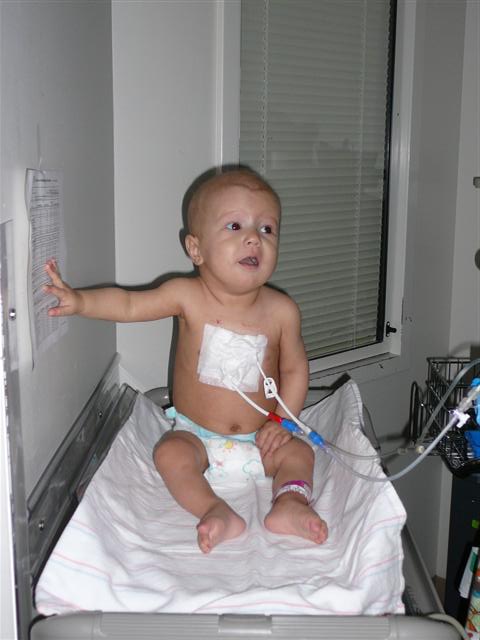
Sully at St. Jude, 2/2008

Posted in God, Suffering and Faith | Leave a comment

“I am the only one left.”

Then a voice said to him, “What are you doing here, Elijah?” He replied, “I have been very zealous for the Lord God Almighty. The Israelites have rejected your covenant, broken down your altars, and put your prophets to death with the sword. I am the only one left, and now they are trying to kill me too.” The Lord said to him, “… Yet I reserve seven thousand in Israel—all whose knees have not bowed down to Baal and all whose mouths have not kissed him.” (1 Kings 19:13b-15a, 18)

A support and fund-raising video made its way to the church’s mailbox recently. Curiosity led me to watch some of the video. One point especially caught my attention. “There are 1,500,000 Christians in the world,” the speaker said. “Imagine what we can do together to spread the gospel message.” To be honest I do not remember the exact number, but it was somewhere between 1,500,000 and 1,600,000. I believe he said in the world, but he could have been speaking of the United States. Either way as I thought about his statement the other day I remembered the above conversation between God and Elijah.

The speaker on the dvd was not speaking of 1,500,000 Christians within a particular denomination. He understands this to be the total number of Christians! You see, he believes, of all the religious groups in the world claiming to be Christian, there is but one true body of Christians, one true church, the one true church of our Lord Jesus Christ. He believes the true church is the one to which he belongs–the churches of Christ. Now this happens to be the church to which I belong.

As I thought about what he said, yes, I thought about Elijah. Everyone who believes in Jesus Christ, who is a disciple of Christ, must live, practice, and teach what he understands God, Christ, and the Spirit, reveal in Scripture. For those of us in churches of Christ or any other body of believers who draw the circle of true believers around their own number, we need to see ourselves in Elijah.

“Lord, we are very zealous for the truth of your gospel. Everyone has rejected the pure truth of your new covenant in Christ. We are the only ones left. We want others to understand the truth. With zeal we teach and stand firm. But we are the only ones left.” The Lord responds, “The circle is larger than the one you have drawn. I have reserved many, many, more, who have not bowed to Baal. People, who like you, believe with humble and honest faith in my Son Jesus Christ. Believers whose lives are committed to Him. Their souls and hearts are in my hands.”

Just thinking out loud.

Posted in Church, Salvation | 1 Comment

Worship: The Expression of Life, Part 3

Worship is the praise, the devotion, and the reverence we give to that which is the center, the most important thing of our lives. Worship is the response of who we are, heart, mind, bodies, words, and actions. Worship is the response of the whole self. Who or what we worship affects the way we live life.

The apostle Paul (Romans 12:1-2) and the apostle Peter (1 Peter 2:4-12) teach us worship sets the agenda for how we deal with all the situations and relationships of life. The issues of life are issues of worship, issues of pleasing and praising God. Paul’s words in Colossians 3:17 present this principle. And whatever you do, whether in word or deed, do it all in the name of the Lord Jesus, giving thanks to God the Father through him.

It is Sunday as I write this post. This morning I gathered with other Christians. We came together as God’s temple to offer him sacrifices of worship. We sang praises to God. Thanksgiving was expressed in prayer. Partaking of the Lord’s Supper we rejoiced in God’s mercy and life-giving grace in Jesus Christ. Given my understanding of Paul and Peter’s teaching, I ask if our worship this morning was the expression of the lives we lived this past week? Consider the following fictitious scenarios based on real life experience. I will place you in each scenario.

This past Monday morning you were about to respond to a person with whom you work. He made a mistake and managed to convince your supervisor it was your mistake. The immediate issue appears to be his actions and your feelings. The deeper issue is whether your actions, words, thoughts, and attitude, will be pleasing to God? Will your response to your coworker be an expression of your worship of God? Will your behavior rise to God as a sweet smelling sacrifice, a pleasing and acceptable expression of praise and thanksgiving to God?

Tuesday evening your husband asked you to do something for him. As you prepared to respond to him, after your own hard day of work, the immediate issue appeared to be his needs and feelings, and your own. Is he asking too much of you? The deeper issue is whether your response will rise to God as a sweet smelling sacrifice, a pleasing and acceptable expression of praise and thanksgiving to God.

Thursday your children come home from school. Suddenly your quiet and peaceful home is in an uproar. You are about to react. The immediate issue appears to be your peaceful time of rest and getting your second breath being disturbed by unruly children and your need to get things under control. The deeper issue is whether your reaction will rise to God as a sweet smelling sacrifice, a pleasing and acceptable expression of praise and thanksgiving to God.

Saturday you found yourself in a morally tempting situation. Satan is putting the opportunity in front of you to give in to a moral weakness in your life. Your desires want fulfillment. The immediate issue appears to be fulfilling your desires. The deeper issue is whether your actions will express the praise and thanks to God you will be offering the following Sunday morning. Will your response to the temptation rise to God as a sweet smelling sacrifice, a pleasing and acceptable expression of praise and thanksgiving to God?

The corporate worship of God’s people can be correct in every detail of form as taught in Scripture, and at the same time be irritating noise to the ears of God. Through the prophet Amos, God rebuked Israel. I hate, I despise your religious feasts; I cannot stand your assemblies…. Though you bring choice fellowship offerings, I will have no regard for them. Away with the noise of your songs! I will not listen to the music of your harps. But let justice roll on like a river, righteousness like a never-failing stream! (Amos 5:21-24; see also Isaiah 1:10-23) The worship of God, the reverence, praise, and glory we give to God on Sunday is only as pleasing and acceptable to God as the lives we live. The beauty, joy, meaning, and depth of the worship of God’s people is only as good as the life that supports it, the life that expresses it. The worship God’s people offer up to God on Sunday is to be the expression of their lives. Our worship together is to flow from lives of submission and service to God, flowing from bodies daily offered as living sacrifices to God.

The lives of God’s people are to be the expression of their worship, flowing from the praise, the glory, and the reverence, they give to God. Their lives are the expression of their worship of God, of who he is and of his mercies in Jesus Christ.

So it is the God we worship who sets the agenda for how we deal with all the situations and relationships of life. The agenda is to deal with every situation and every relationship in ways holy and pleasing to God. The agenda is to deal with every situation and every relationship in ways expressing our devotion, praise, and thanksgiving to God. The agenda is to worship God in all we do, whether in word or deed, do it all in the name of the Lord Jesus, giving thanks to God the Father through him (Colossians 3:17).

Posted in Worship | Tagged | Leave a comment