Psalm 116:15, The death of His faithful is precious to God?

2.16P1010793“Precious in the sight of the LORD is the death of his saints.”

People turn to this verse and ministers quote it at funerals for comfort of the grieving. How is the death of God’s faithful precious in His sight? The interpretation given to the verse by The Message captures this understanding. “When they arrive at the gates of death, GOD welcomes those who love him.” A thought which is true, but is this the point being made by the psalmist? The death of God’s faithful is precious to God for they will now be with him in heaven? The death of our fifteen month old grandson Sully was precious in the sight of God? Such a tragic, all too soon, death is a precious thing to God? In this we are to find comfort!? I do not find comfort in this understanding of Psalm 116:15.

Death, the apostle Paul wrote, is an enemy. The last enemy to be destroyed by Christ when he returns is death (1 Corinthians 15:24-26). Death is not a friend of life, not a part of life, but an enemy of life. How can an enemy’s defeat of one of his saints be precious in the sight of the LORD?

In his song the psalmist is thanking Yahweh for delivering him from death. The psalmist’s song is an expression of love for Yahweh and the surrender of his life to serving his God in response to God saving his life. “The cords of death entangled” him. “The anguish of the grave came upon” him. He cried out to God for mercy, calling on the name of Yahweh. In his grace, righteousness, and compassion, Yahweh heard the psalmist’s cry and delivered him from death. Yahweh delivered him so that he might “walk before the LORD in the land of the living.” I find it strange that in this context the psalmist would write that the death of His saints is precious to God.

I believe the following capture the meaning of the psalmist’s words. An older version of the NLT reads, “The LORD’s loved ones are precious to him; it grieves him when they die.” The latest version of the NLT reads, “The LORD cares deeply when his loved one dies.” The Jewish TANAKH translates, “The death of his faithful ones is grievous in the LORD’s sight.” The NJB reads, “Costly in Yahweh’s sight is the death of his faithful.” And so Yahweh answered the psalmist’s cry and delivered him from death. In response the psalmist asks, “How can I repay the LORD for all his goodness to me?”

With this understanding how does this psalm which celebrates God’s deliverance of the psalmist from death help those whose prayers God heard but His answer was not deliverance? Fervent prayers were offered up to God to deliver Sully from his leukemia, his suffering, and death. Like Sully, your loved one was not delivered so that he or she might walk before the LORD in the land of the living.

The psalmist does not answer all the whys. He does help me understand that Sully, that your loved one, that each of his faithful, are so very dear to God, yes, precious to God. When the enemy, death, takes away the life of God’s faithful, God grieves. He grieves with us when His faithful are robbed of His gift of life. “Costly in Yahweh’s sight is the death of his faithful.” I am unable to give God praise and thanksgiving for hearing my cries and delivering my grandson from death. For He did not so answer my prayers as I wanted. Yet I do find comfort in God’s grief over Sully’s death. His heart was so stricken. I find comfort in God’s grieving with me.

I am unable to give God praise and thanksgiving for hearing my cries and delivering my grandson from death. Yet I see God’s grief is so heavy that He shared in Sully’s death by sending His own Son to die on the cross. How precious Sully, all of us, are to God. Such love for Sully, for all of us, lifts up my heart. God’s love and His grace go further. Christ broke the chains with which death entangles us. Rising up from the grave to life, Christ conquered death.

The day is coming when Christ will return, when the last enemy, death, will be conquered. Sully’s earthly body, enchained by death, will break free from death, perfect, whole, created for eternity. In spirit Sully is now with Christ. On that blessed day he will be, in spirit and body, living in the presence of the Father, Son, and Spirit, in the new heavens and the new earth. So it is and will be for all of God’s faithful. For this I give God praise and thanksgiving.

“I will lift up the cup of salvation and call on the name of the LORD…. Praise the LORD.”

Posted in God, Grief and Faith, Hope, Love of God, Psalms, Resurrection, Suffering and Faith | Tagged , , , , , | Leave a comment

Angry with God, Forgiving God

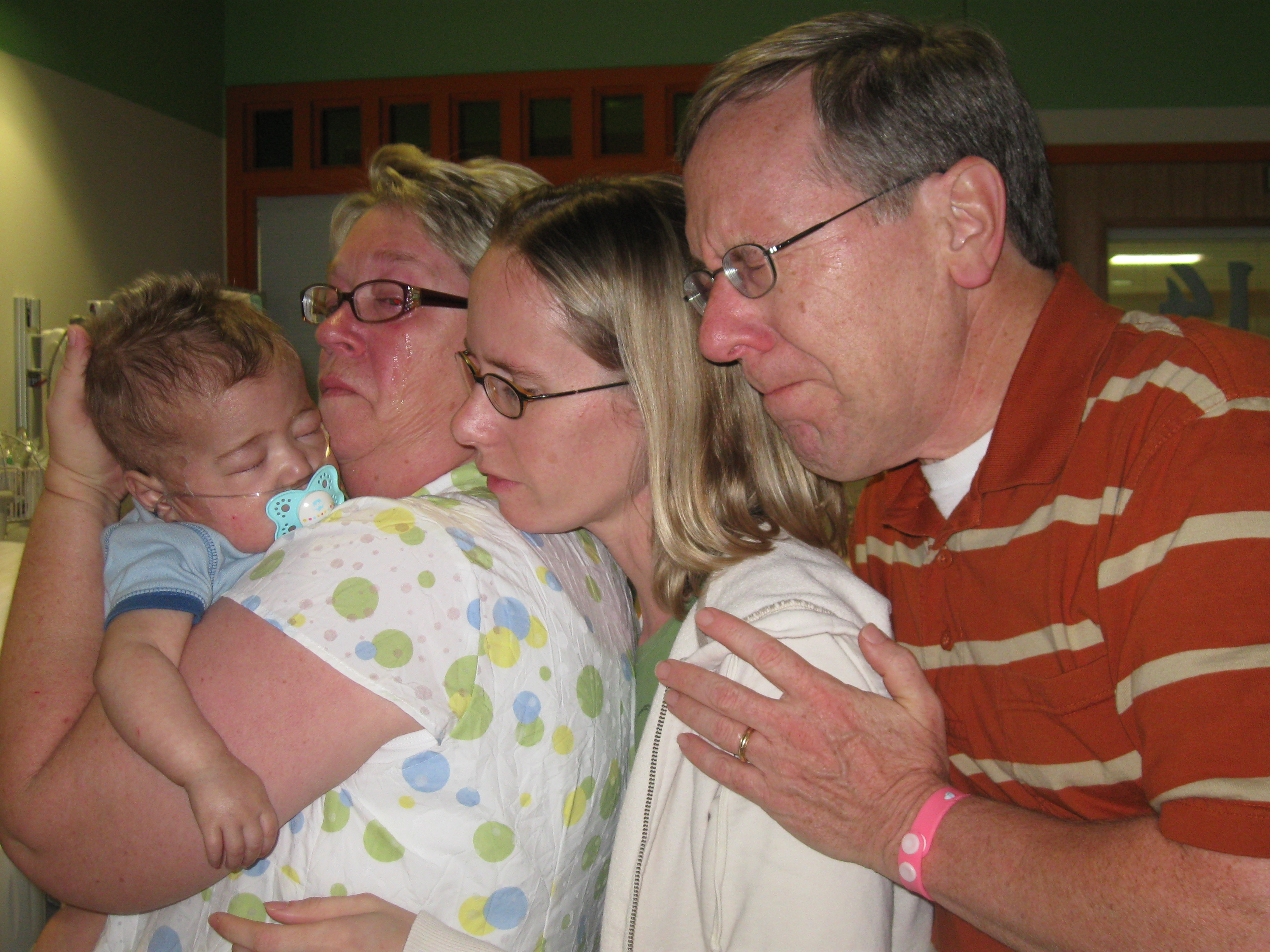
8.1IMG_0316(August 2, 2015, this Sunday, will mark seven years since our grandson Sully, fifteen months old, died. For thirteen months he battled leukemia. His illness, his suffering, his death, challenged my faith as it had never been challenged. I first wrote the following post as the last in a series on forgiveness. I titled it “Forgiving God?” I repost it in memory of Sully. As when first posted, so now, the purpose is first, to help us understand and be as patient as God with the grief, anger, and doubts of those who are going through a darkness in their lives we have not experienced. Second, I speak especially to those who have known the depths of the blackest darkness of tragedy, suffering, and loss in their lives. Who struggle with God, his seeming silence, and the contradiction of our perception of God and his reality. With hesitation, humility, and grief, I share the picture of Sully, my wife, Sully’s mother, our daughter, and myself. This was the day before Sully died. I share this picture for you to understand I write these words from a heart that has known the depths of darkness, from a heart that has been angry with God and has struggled with doubt. I pray my words will help if you find yourself in the darkness.)

Lewis Smedes tells the story of a tailor who leaves his prayers and, on the way out of the synagogue, meets a rabbi. “Well, and what have you been doing in the synagogue, Lev Ashram?” the rabbi asks. “I was saying prayers, rabbi.” “Fine,” the rabbi responded, and did you confess your sins?” “Yes, rabbi, I confessed my little sins,” the tailor replied. “Your little sins?” the astonished rabbi asked. “Yes, I confess that I sometimes cut my cloth on the short side, that I cheat on a yard of wool by a couple of inches.” “You said that to God, Lev Ashram?” “Yes, rabbi, and more. I said, ‘Lord, I cheat on pieces of cloth, you let little babies die. But I am going to make you a deal. You forgive me my little sins and I’ll forgive you your big ones.’”1

We recoil at such boldness. God can be blamed? God does wrong for which he needs to apologize? God needs our forgiveness? Quickly we respond, God does not sin. We do not always understand the reasons for bad and tragic events. God, however, does no wrong. We will quote James, “God cannot be tempted by evil” (James 1:13). And there is what the writer of Hebrews says about Jesus, “who has been tempted in every way, just as we are–yet was without sin” (Hebrews 4:15). Again James writes, “Every good and perfect gift is from above, coming down from the Father of the heavenly lights, who does not change like shifting shadows” (James 1:17). If God does wrong or has something for which to apologize, is he God? The prophet Hosea wrote, “The ways of the LORD are right” (Hosea 4:9). God does no wrong. Blame cannot be rightly cast in God’s direction. There is never a need to forgive God.

Yet…

There are so many questions when tragedy strikes our lives. We want to know why there is such suffering and injustice in our lives. Crying out for answers some answers come. So often there are no answers or explanations which satisfy the heart. At such times we cry out with the Psalmist and with Jesus, “My God, my God, why have you forsaken me?” (Psalm 22:1; Matthew 27:46)

Elie Wiesel was fifteen years old when he, with his family, were taken from their home in Sighet, Transylvania, and imprisoned at Auschwitz in 1944. In 1958 his book Night was first publiched. At age fifteen he was a Jewish boy who desired to attain the depths of faith in and understanding of God. At age fifteen he was thrown into a darkness so black, so terrifying. His words penetrate the reader’s heart with the depths of darkness possible within the human race. In the face of the crematorium, where Elie witnessed babies being thrown into the flames, men started to pray. Looking back at that day the young man, Elie Wiesel, who survived the darkness, writes, “For the first time, I felt anger rising within me. Why should I sanctify His name? The Almighty, the eternal and terrible Master of the Universe, chose to be silent. What was there to thank Him for?”2

Wiesel writes of one young boy who “had a delicate and beautiful face–an incredible sight in this camp. (…His was the face of an angel in distress.).” He was placed in solitary confinement, tortured, and condemned to death. Elie Wiesel and thousands of others watched as this young boy was hanged. “All eyes were on the child. He was pale, almost calm, but he was biting his lips as he stood in the shadow of the gallows….the boy was silent. ‘Where is merciful God, where is He?’ someone behind me was asking.” The signal was given, the young boy and two men were hanged. “We were weeping.” “Then came the march past the victims. The two men were no longer alive. Their tongues were hanging out, swollen and bluish. But the third rope was still moving: the child, too light, was still breathing… And so he remained for more than half an hour, lingering between life and death, writhing before our eyes….He was still alive when I passed him. His tongue was still red, his eyes not yet extinguished. Behind me, I heard the same man asking: ‘For God’s sake, where is God?’ And from within me, I heard a voice answer: ‘Where is He? This is where–hanging here from this gallows…’ That night, the soup tasted of corpses.”3

This was not an answer of faith, “God is with this poor boy. His suffering will not be in vain.” Rather it was a cry of faith dying, of God dying. Where is God? What answer is there to give this cry of the heart? To a boy of fifteen in the blackest darkness what answer from the intellect can satisfy his heart? Do not be so quick to shake a finger of rebuke. There are those times when the darkness of evil, the darkness of suffering and tragedy, is so black that the person of strongest faith cries out against God, accuses God, and demands God answer.

Jeremiah has been called the weeping prophet. His personal suffering at the hands of his own people was harsh. He grieved as he watched his beloved nation, Judah, ravished by the fierce army of Babylon. The darkness was so black Jeremiah cried out, “Cursed be the day I was born!…Why did I ever come out of the womb to see trouble and sorrow and to end my days in shame?” (Jeremiah 20:14, 18). Jeremiah blamed God. “The LORD is like an enemy; he has swallowed up Israel” (Lamentations 2:5). The prophet held God accountable for the suffering of Judah. He also held God accountable for his own suffering. “He has driven me away and made me walk in darkness rather than light; indeed, he has turned his hand against me again and again, all day long. Even when I call out or cry for help, he shuts out my prayer. He pierced my heart with arrows from his quiver. So I say, ‘My splendor is gone and all that I had hoped from the LORD’” (Lamentations 3:2, 8, 13, 18).

God said of Job, “There is no one on earth like him; he is blameless and upright, a man who fears God and shuns evil” (Job 1:8). Then tragedy struck. Job lost all his wealth and more tragically all his children. He continued to praise God. Then Job was struck with a painful disease covering his body in sores. His wife said to him, “‘Are you still holding on to your integrity? Curse God and die!’ He replied, ‘You are talking like a foolish woman. Shall we accept good from God, and not trouble?’” (Job 2:9-10).

With time Job’s suffering became intolerable. His friends accused him of deserving the evil that happened to him. In response he defended himself and began to question God. There was no logical reason for what happened to him. It was not fair or just. Job challenged and accused God. “Therefore I will not keep silent; I will speak out in the anguish of my spirit, I will complain in the bitterness of my soul” (7:11). “As surely as God lives, who has denied me justice, the Almighty, who has made me taste bitterness of soul” (27:2). “Then know that God has wronged me and drawn his net around me. Though I cry, ‘I’ve been wronged!’ I get no response; though I call for help, there is no justice. His anger burns against me; he counts me among his enemies” (19:6, 7, 11).

The pillars holding up life collapse under the weight of suffering and pain. A body is ravished by disease or accident. A marriage disintegrates. A job is lost and a new job not found. Childhood nightmares come to life after years of being locked up. A child dies. Some of us, like Jeremiah, cry out wondering how God could become like an enemy. Others, like Job, complain that God has done us wrong. There is no justice in what has happened. The darkness can be so black that like Jeremiah and Job we may question the very reason for our existence. Why, if this is what life brings, why were we ever born? There are those times in life when the hardship, the suffering, and the pain is so great, the darkness so black, the person even of the strongest faith will cry out from his heart against God with a complaint for which there is no satisfying answer.

You might tell me such complaint against God is sin. After all the text says concerning Job’s initial patience and praise of God, that he “did not sin by charging God with wrongdoing,” “Job did not sin in what he said” (Job 1:22; 2:10). Sin? Yes, when such complaint leads to unbelief and no return.

Yet…

As I read the whole story I am taught that such complaint is not necessarily sin. It is human. It is the cry of a broken and crushed heart. In his compassion God listens. He bares his chest for us to beat with our fists, his arms around us, his heart feeling our grief, hurt, and anger. When the heart cries out with such complaint, there is a need to forgive God. Not forgiveness in the sense of forgiving God for wrong he has done. The truth is God has not done anything wrong. Even so, the heart feels wronged. The heart is filled with resentment and bitterness. At such times if we do not forgive God, that is, if we do not let go of the resentment and the bitterness we may stumble from faith to doubt, to unbelief. To forgive God is a healing of the heart as the resentment, bitterness, and blame are let go. With such healing we again find it possible to trust God.

Jeremiah’s heart was dark with depression. All that he hoped from God was gone. He laid the blame for all his suffering at the feet of God. As he complained, as he accused, he also remembered. “Yet this I call to mind and therefore I have hope: Because of the LORD’s great love we are not consumed, for his compassions never fail. They are new every morning; great is your faithfulness. I say to myself, ‘The LORD is my portion; therefore I will wait for him’” (Lamentations 3:21-24).

God was silent for what seemed such a long time as Job defended himself and as he challenged God to justify what happened to Job and to his family. God finally spoke. He did not explain to Job why so much tragedy happened. What God did was bring Job back to the reality of Job’s humanness and of God’s divine glory and power. Job responded, “Surely I spoke of things I did not understand, things too wonderful for me to know” (Job 42:3). A friend translates Job 42:6 (and I see the possibility), “I melt before you and am consoled over my dust and ashes.” Job humbled himself before God. He let go of the bitterness and the resentment. Job let go of his presumed right to judge God. He was consoled, comforted in the dust and ashes of his life by his encounter with God. God brought Job back to his faith, to his trust in God’s sovereignty, righteousness, holiness, wisdom, and love. He still didn’t understand why it all happened. Yet he trusted God.4

Augustine tells of a vision of seeing a little boy at a beach scooping up the ocean thimbleful by thimbleful and emptying it out on the sand. Then he sees an angel who tells him that this boy will have emptied out the entire ocean long before Augustine has exhausted what can be said about God.5

Hardships and sufferings challenge our understanding of and trust in God. In the darkness of the night we struggle to see him. As the eyes of our hearts see anew his power and sovereignty revealed in creation, in Scripture, in His people who care for us, and in Jesus Christ, we come back to trusting him as we are humbled before him. Remembering his love and compassion for us in the past and especially in the suffering and sacrifice of Jesus Christ, we are not consumed by the darkness. The assurance of God’s love renews us. The certainty of hope in Jesus Christ sustains us. Confident God understands, even though we do not, we come back to trusting him.

Hear the enemies of Christ mock him as he hung on the cross. “Where is God now?” Someone answers, “He is here, nailed to the tree.” With tears we realize he is on that cross. It is God who is suffering, bearing all the suffering and darkness. It is God who takes his last breath and cries out, “It is finished!” On the slab in the tomb is the body of God in the person of his Son. How awful is the darkness! Yet, on Sunday morning, another answer is given to the question, “Where is God now?” The answer is heard, “He is not in the tomb as you can see. He is risen.” The light overcomes the darkness.

He is risen! We remember. We believe. In spite of the darkness in our lives we know God’s love never forsakes us. Hope in Christ is true and certain. Still we do not understand when the darkness overwhelms us. Yet in Christ we know God has not wronged us. God is not to blame. In Christ, our fellow sufferer, God is with us. He does not need our forgiveness, but we need to forgive. He listens with patience and compassion. We let go of the anger, the bitterness, and the resentment. We stop judging God. Now we are able to bow in humility before our Lord and Savior, even if we do not understand why the darkness, we trust God; we trust the Light he sent into the darkness, the Light who is his Son, the Light of his love.

This is what we hear in the words of Job. “I melt before you and am consoled over my dust and ashes” (Job 42:6). Hear the words of Jeremiah. “Because of the LORD’s great love we are not consumed, for his compassions never fail. They are new every morning; great is your faithfulness (Lamentations 3:22-23). Forgiveness, humility, renewed faith and trust, we also hear from the young Jewish boy who lived through the blackest night. Forty-two years later we hear his words as he accepted the Nobel Peace Prize. “But I have faith. Faith in the God of Abraham, Isaac, and Jacob.”6

___________________

1. Lewis B. Smedes, Forgive & Forget, Healing the Hurts We Don’t Deserve (New York: HarperOne, 1984, 1996), 82.

2. Elie Wiesel. Night. Translated by Marion Wiesel. (New York: Hill and Wang, 2006), 32-33.

3. Ibid., 63-65.

4. John Mark Hicks, “Forgiving God: From Praise to Bitterness to Comfort,” http://johnmarkhicks.wordpress.com/2008/12/07/forgiving-god-from-praise-to-bitterness-to-comfort.

5. Peter Kreeft, http://www.peterkreeft.com/home.htm.

6. Wiesel, 120.

Posted in Forgiveness, God, Grief and Faith, Suffering and Faith | Tagged , , , , | Leave a comment

The Humility of Baptism

“In the same way, count yourselves dead to sin but alive to God in Christ Jesus” (Romans 6:11).

My wife and I recently spent two days in Lancaster, PA Amish country. Since then a word which has been on my mind is humility, an important characteristic of Amish belief and the Amish way of life. Thinking of humility turned my mind to baptism and the Amish. Then to the words of the apostle Paul in Romans 6. Then to baptism in my fellowship, the churches of Christ.

In their book, The Amish Way, Kraybill, Nolt, and Weaver-Zercher briefly describe baptism among the Amish. “As baptismal candidates kneel and confess their faith in Christ, they renounce three things: their self, the devil, and the world. This trio threatens the spiritual well-being of the community: selfishness produces pride and disobedience, the cunning devil with his bag of tricks can lead members astray, and the lure of worldly things can pollute the purity of the church” (emphasis mine, 126). Humility–kneeling, confessing, renouncing.

I turn to Paul’s words in Romans 6. Verse 3, “Or don’t you know that all of us who were baptized into Christ Jesus were baptized into his death?” Verse 6, “For we know that our old self was crucified with him so that the body of sin might be done away with, that we should no longer be slaves to sin.” Verses 11 and 12, “In the same way, count yourselves dead to sin but alive to God in Christ Jesus. Therefore do not let sin reign in your mortal body so that you obey its evil desires.” Humility–“baptized into his death,” “old self was crucified,” “count yourselves dead to sin but alive to God.”

In the Amish practice water is poured into the cupped hands of the bishop held over the head of the one being baptized. The water drips onto the head of the kneeling baptismal candidate. In the kneeling is an act of humility, the humility of faith in Jesus Christ. In immersion into water, the practice of the churches of Christ, the immersion of the one being baptized is an act of humility, the humility of faith in Jesus Christ. At least I pray that is how the baptismal candidate understands his immersion. I pray humility is the attitude of heart with which he/she approaches his/her baptism.

Humility. I cannot, nor do I want to, judge the hearts of everyone who is baptized or the hearts of the churches in the practice of baptism. Yet I have been asking myself since our little trip to Amish country, has baptism become a practice which lifts up the person being baptized instead of the Christ into whom he/she is being baptized? Do we, including myself, adequately teach the understanding of baptism taught in Romans 6–faith in Christ, humility before Christ, death with Christ to sin? Is baptism understood simply as one step in the check-list of church membership instead of death to the old self and resurrection with Christ to a new way of life to God in Christ Jesus?

When I was baptized forty-seven years ago I was asked, “Do you believe Jesus Christ is the Son of God, and that he died on the cross and rose from the dead for the forgiveness of your sins?” Forty-four years in ministry I have asked the same question. Confession. I watched a video clip today of a baptism, heard this question asked, and the simple answer given, “Yes.” I thought of the Amish, kneeling before the congregation, confessing faith (as with the question I was asked and have asked), but also renouncing self, devil, and world, and committing to obedience and submission to Christ and to life in the church.

Humility. Would it be better at baptism to do the following. Have the baptismal candidate kneel before the congregation. Yes, ask, “Do you believe?” Then ask, “Do you renounce your self, the devil, and the world?” Finally ask, “Do you, through faith in Christ and in this act of baptism into Christ, commit yourself to obedience and submission to Christ and to life in the church?”

Humility. Emphasize the very humbling nature of baptism, burial in death, death to self, death to sin. Emphasize the humbling nature of the resurrection in baptism, resurrection with Christ into a new way of life, lived unto God in Christ Jesus. Death to sin. Resurrection to holiness and righteousness of life.

Posted in Baptism, Faith, Humility | Tagged , , | Leave a comment

Sunday, Another Visit to the Grave

(From my CaringBridge site in honor and memory of our grandson Sully. Written on Easter Sunday, 2010.)

Sunday had come. The Sabbath was over.  Women who had followed Jesus went to the tomb to finish the traditional anointing of the body of Jesus for entombment.  To their surprise and concern, the stone at the door of the tomb had been rolled to the side.  The tomb was open.  Entering the tomb they found the body of Jesus missing.  What happened?  Did his enemies steal his body to add further shame to his death?  While they were standing and wondering two men suddenly appeared beside them with clothes brightly gleaming. Angels?  The women bowed down before them in fear.  The men said to them, “Why do you look for the living among the dead?  He is not here; he has risen!” (Luke 24:1-5).  The darkness and grief of the Sabbath gave way to the sunshine and joy of Sunday morning, of the resurrection of Jesus Christ.  Their hope was not dead but very much alive.  He is risen and he is exalted to the right hand of God (Acts 2:33).

The faith and hope of all who believe in Jesus Christ is in the empty tomb.  His resurrection is our confidence of our resurrection and the resurrection of all who have died in Christ.  The promise of God is that Christ “will come down from heaven…and the dead in Christ will rise.”  Those who are alive will be gathered with the risen to be with Christ (1 Thessalonians 4:16-18; 1 Corinthians 15:35-58).  This is our hope, our confidence, the day will come when we will be reunited with our Sully and your child or grandchild or brother or sister or spouse, with your loved one for whom your heart now aches and grieves.

The timeframe for the events of Jesus’ death and resurrection was so compact, three days.  The disciples didn’t believe the women.  He was dead.  What was this nonsense of seeing him alive?  The empty tomb left Peter confused.  Only when they saw the risen Christ did they believe.  This is the picture of our experience, of our grief and confusion.

Now is our Sabbath, the day, the third day, the month, the year, the decade, after the funeral. Time continues.  The grave is not empty.  The place he or she created for us is still empty and lonely, no other can fill it.  Each day is another day without him or her.  Like the disciples we doubt.  We question.  Yet imagine grief without hope.  Imagine a reality without the resurrection of Jesus and the hope of the resurrection of all who have died in him.  We continue in the time after the funeral and before the resurrection, a difficult time.  Hope, the hope the resurrected Christ brings, does comfort and encourage.  Death has not won the victory.  Yes, even the cruel and senseless death from pediatric cancers, cannot rob our children or us of the victory over death that is theirs and ours in Jesus Christ.  Sunday morning is coming.  The Son will shine brightly.  The graves will be empty.  Resurrection life will be the reality of the people of God.  Then, when we see Him and them, all grief and doubt will be gone.  The faith and hope we now hold on to, sometimes barely, will be reality.  Encourage one another with these words                       (1 Thessalonians 4:18).

Posted in Easter, Faith, Grief and Faith, Hope, Resurrection, Resurrection of Jesus, Suffering and Faith | Tagged , , , , | 1 Comment

The Day after Good Friday

(From my CaringBridge site in honor and memory of our grandson Sully. Written on the day after Good Friday, 2010.)

IMG_4737A Grief Observed is C. S. Lewis’s journal of his grief when his wife Joy died after a painful battle with cancer.  His stepson, Douglas Gresham, wrote the forward to my copy of this little book.  “All human relationships end in pain–it is the price that our imperfection has allowed Satan to exact from us for the privilege of love,” Gresham writes.  “The greater the love the greater the grief, and the stronger the faith the more savagely will Satan storm its fortress.”  He gives Satan his due for the suffering in this world.  Later in the forward Gresham wrote of his mother’s death and the love she and Lewis shared.  “It almost seems cruel that her death was delayed long enough for him to grow to love her so completely that she filled his world as the greatest gift that God had ever given him, and then she died and left him alone in a place that her presence in his life had created for him.”

One of the observations of Lewis seems it should be so obvious.  How often does our pain and the pain of our loved one become so blended together we fail to see what Lewis came to understand.  “I had my miseries, not hers; she had hers, not mine.”  Joy’s pain needed to be his focus while she lived.  O, the day she died, then his pain became the focus and how it suddenly was so sharp.  “The end of hers would be the coming-of-age of mine. We were setting out on different roads.  This cold truth, this terrible traffic-regulation (‘You, Madam, to the right–you, Sir, to the left’) is just the beginning of the separation which is death itself.”  Just the beginning…

It is Saturday, the Sabbath, the holy day for the ancient people of God, Israel. It is the day after the separation began.  Jesus died yesterday.  The body of Jesus was in the tomb.  The end of Jesus’ suffering was the coming-of-age of the suffering, of the grief of the family, disciples, and friends of Jesus.  Their hearts were overwhelmed with the grief, the loss, of a son, of their Lord and hope, lying cold in the grave. It all seemed so hopeless. Visiting the grave. That is not the way it was supposed to be. The day after the funeral, after all the focus and energy on the events leading up to the death and the death itself, after all the people are gone.

The day after the funeral, at the grave, it is so numbing, so frightening.  The days, the months, the years, life without him, without her, all the vision and dreams vanished. Visiting the grave, tears watering the grass, this is not the way it was supposed to be.  All hope is gone.  The many trips to the grave do not become any easier. It is Saturday, the Sabbath, the day after his death.  This day the pain is more severe.  It must be a dream.  This can’t be real.  The experience of C. S. Lewis is our experience.  The separation began with his/her death and our suffering came-of-age.  How often in these days after do we hit bottom.  It can’t hurt any deeper.  Then “the bottom gives way and (we) fall into a darkness no words can explain.”  How can it get any worse?  What will tomorrow bring?  The days after, these days of separation…  Tomorrow is Sunday, another day to visit the grave.

Sources of Quotes:

C. S. Lewis, A Grief Observed.  San Francisco: HarperSanFrancisco, 1961, Foreword, 1994. Quotes from pages 10, 11, 15, 30.

Quote in last paragraph from Steven Curtis Chapman, Jesus Will Meet You There on CD, Beauty Will Rise.

Posted in Easter, Grief and Faith, Hope, Resurrection, Suffering and Faith | Tagged , , , , | 1 Comment

Good Friday

(From my CaringBridge site in honor and memory of our grandson Sully. Written on Good Friday, 2010.)

On this Good Friday, I remember the suffering of Jesus.

My God, my God, why have you forsaken me? Why are you so far from saving me, so far from the words of my groaning?…But I am a worm and not a man, scorned by men and despised by the people. All who see me mock me; they hurl insults, shaking their heads: “He trusts in the Lord; let the Lord rescue him….” Roaring lions tearing their prey open their mouths wide against me…My heart has turned to wax; it has melted away within me. My strength is dried up like a potsherd, and my tongue sticks to the roof of my mouth; you lay me in the dust of death…a band of evil men has encircled me, they have pierced my hands and my feet.  (Psalm 22)

Then they spit in Jesus’ face and struck him with their fists. Others slapped him. (Matthew 26:67)

Pilate had Jesus flogged, and handed him over to be crucified….They spit on him and took the staff and struck him on the head again and again. After they had mocked him…they led him away to crucify him.  (Matthew 27:26-31)

Those who passed by hurled insults at him, shaking their heads…In the same way others mocked him…In the same way the robbers who were crucified with him also heaped insults on him…And when Jesus had cried out again in a loud voice, he gave up his spirit.”  (Matthew 27:39-50)

When they hurled their insults at him, he did not retaliate; when he suffered, he made no threats. Instead, he entrusted himself to him who judges justly. He himself bore our sins in his body on the tree, so that we might die to sins and live for righteousness; by his wounds you have been healed.  (1 Peter 2:23-24)

This is how we know what love is: Jesus Christ laid down his life for us.  But God demonstrates his own love for us in this: While we were still sinners, Christ died for us.  (1 John 3:16; Romans 5:8)

For Christ’s love compels us (2 Corinthians 5:14). His love which led him to willingly know our suffering by suffering with us compels me to trust him.

During a time when his grief was overwhelmingly heavy, Steven Curtis Chapman wrote the song, I Will Trust You.  Some of the words follow…

But right now pain is all I’ve got/ It feels like it’s all I’ve got/ But I know it’s not/ Now I know You’re all I’ve got/ And I will trust You, I’ll trust You/ Trust You God, I will/ Even when I don’t understand/ Even then I will say again/ You are my God/ And I will trust You…Chorus/ And with every breath I take/ And for every day that breaks/ I will trust You, I will trust You/ And when nothing is making sense/ Even then I will say again/ God, I trust You, I will trust You/ I know Your heart is good/ I know Your love is strong…  (from the CD Beauty Will Rise).

Posted in Cross of Christ, Easter, Faith, Grief and Faith, Love of God, Suffering and Faith, Uncategorized | Tagged , , , , | 1 Comment

The Night before Good Friday

(Our grandson, Sully, was diagnosed with leukemia at age two months. He became a patient at St. Jude Children’s Research Hospital in Memphis, TN. For thirteen months he fought a courageous fight. He died at the age of fifteen months. This post and those which will follow the next three days were written in 2010 on my CaringBridge site in honor and memory of Sully. These are reflections on Easter from the heart of a grandfather in grief. This was written on Thursday night before Good Friday, 2010.)

I keep turning to the cross in these writings. I must do so again tonight, for it is late Thursday night, the night before Good Friday.  As they say on news broadcasts, on this day in history, around 33 A.D. (or C.E. if you prefer), Jesus, having finished eating the Passover with his disciples, went to Gethsemane.  He began to be deeply distressed and troubled….“My soul is overwhelmed with sorrow to the point of death,” he said…Going a little farther, he fell to the ground and prayed that if possible the hour might pass from him [that he not need to die on the cross]. “Abba, Father,” he said, “everything is possible for you. Take this cup [suffering and death on the cross] from me. Yet not what I will, but what you will” (Mark 14:32-36).

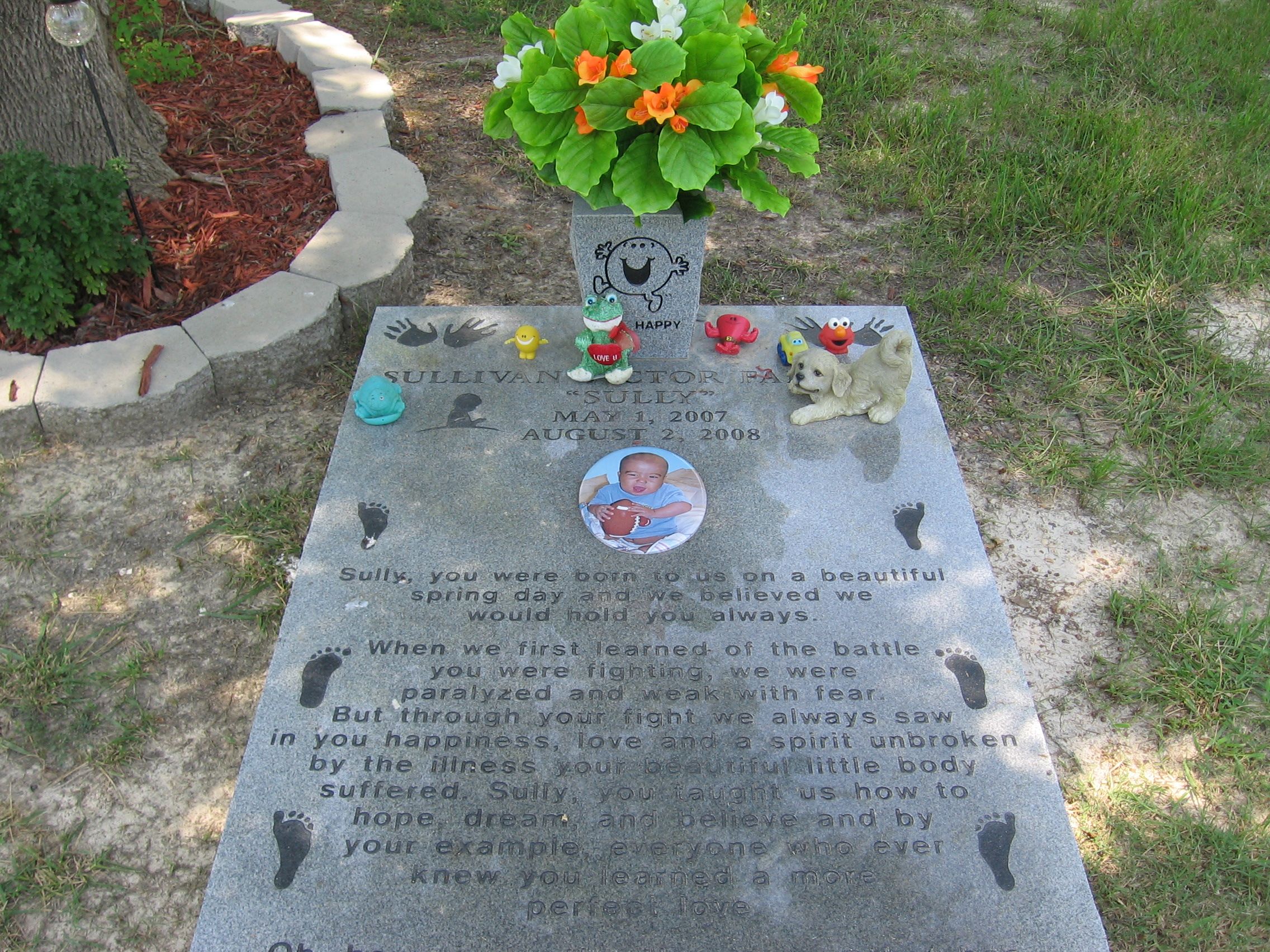
Earlier tonight I was reading, sitting in front of the computer.  Soon the screen went into protective mode or whatever it is called, a slide show began, pictures selected randomly by the computer.  Happy pictures of grandchildren, scenery shots, and then suddenly there was Sully’s little casket waiting to be lowered in the grave, followed by pictures of Sully, obviously sick, and a picture of my wife and myself standing at his open casket in the church.  The next picture was the sweet, heart wrenching picture of my wife, his grandmother, holding him the afternoon before he died, Sully’s mother, our daughter, hugging her from behind.  We knew he was dying.  How we prayed those thirteen months, “Father, everything is possible for you. Let this hour pass from Sully. Restore him to health. Remove this horrible disease from his little body.  Give him life, long life, with the joy of good health.  Let him run and play and laugh without pain.”

Everything is possible with God.  It seems Jesus was saying, “Father you can accomplish your purpose another way, without the cross.”  It was not to be.  The heavenly Father answered the pleas of his Son, his only and unique Son, with strength to endure all that came to him that night and the following day, to endure the suffering and death of the cross.  After his third time of praying his prayer, of pleading for another way, pleading for his life, Jesus said, “Enough! The hour has come. Look, the Son of Man is betrayed into the hands of sinners. Rise! Let us go! (Mark 14:41-42).  With courage which came from his faith, his trust, in his Father, Jesus accepted his Father’s answer.  Jesus willingly suffered and died on that cross.

Everything is possible with God.  That is what Jesus said.  Believing him we prayed and prayed and prayed.  The hour did not pass.  Restored health and life were not to be for Sully.  The cup of leukemia was not removed but fully drunk.  As bravely as a fifteen month old can, Sully, like so many other children, accepted God’s answer.  He entrusted himself to the Father.  Now we who love him find ourselves praying for this hour to pass, the hour of our grief, for the cup of loss and pain to be removed.  It continues.  Sully is gone.  His painful struggle will always linger in our memories.  Everything is possible with God.  Sully’s body is still in the grave.  His spirit is with his Lord.  That is not going to change.  God has answered.  We, as all who have walked this journey, now seek to trust the Father as Jesus did, and as Sully and so many children have (and a child shall lead them).

Posted in Cross of Christ, Easter, Grief and Faith, Hope, Resurrection, Resurrection of Jesus, Suffering and Faith | Tagged , , | Leave a comment

The Birth of Christ and Pediatric Cancer–Remembering Sully

In Revelation 12 the Apostle John describes a very different scene of the birth of Jesus. John uses bold, vivid, striking, and startling images. His is a story powerfully and imaginatively revealing the spiritual reality of God’s invasion into his creation through Jesus Christ. The physical images are larger than life. A pregnant woman about to give birth is clothed with the sun. The moon is the rest for her feet. A rather immense image. There appears an enormous seven headed red dragon whose tail swept a third of the stars out of the sky. The dragon stood in front of the woman waiting to devour the baby when he was born. When the woman gave birth to her son he was snatched up to God and to his throne, where he will rule all the nations with an iron scepter. The images are not the reality but powerfully represent the reality of Satan’s failure to defeat God’s purposes in Jesus. Jesus came to save, to redeem, and to free all who will put faith in God through Him. John’s message to a persecuted church—it may appear that Satan, that evil, is dominating and victorious. The reality—Christ is on the throne. He has been victorious over Satan. The dragon still rages, like a wild animal unleashing his fury as he is dying of his mortal wounds. Even the martyrs who have died because of their faith in Christ, they have not been defeated. Rather they overcame [the dragon] by the blood of the Lamb (Revelation 12:11a). John is encouraging the Christians of his day to hold to their faith in hope.

SullyOur infant grandson, Sully, was diagnosed with leukemia at age two months. He died at age fifteen months. Remembering Sully, I consider this text a good metaphor of pediatric cancers. This great and horrible dragon seeks to devour the children he attacks. With every effort to oppose him he is enraged. At times he appears to be accomplishing his hideous and horrific purpose. He is thwarted at every turn by courageous children who, encouraged, supported, and loved by their parents, fight with strength beyond their years. Medical staffs and researchers at St. Jude Children’s Research Hospital and other hospitals fight valiantly to drive back the dragon. At times he is defeated. Children recover. The dragon loses all power over them. At other times, all too many, the dragon appears to win, to devour his victims. Death, the dragon beats his breast and his seven heads mock with a hideous shout of victory. Contrary to appearances, however, Sully and the other children, even in death, have overcome the great and hideous dragon. They have been snatched up to God, to his Son, and to life.

O how I want Sully to still be with us, to see him with his sister and brother and cousins open the gifts under the tree. I still at times see his picture, think about him, or speak his name, and my heart breaks. So it will be until I die because I love and will always love Sully. Yet my faith in the message of the apostle’s powerful picture gives comfort in the midst of tears. Comfort found in the hope of Jesus Christ. Sully is with Him. One day I will be with Him and so with Sully.

Posted in Christmas, Eternal life, Faith, Grief and Faith, Hope, Suffering and Faith | Tagged , , , , | 1 Comment

Crisp Air, Turkey, Football

Liberty vs. Allen Liberty close to touchdown

Liberty vs. Allen
Liberty close to touchdown

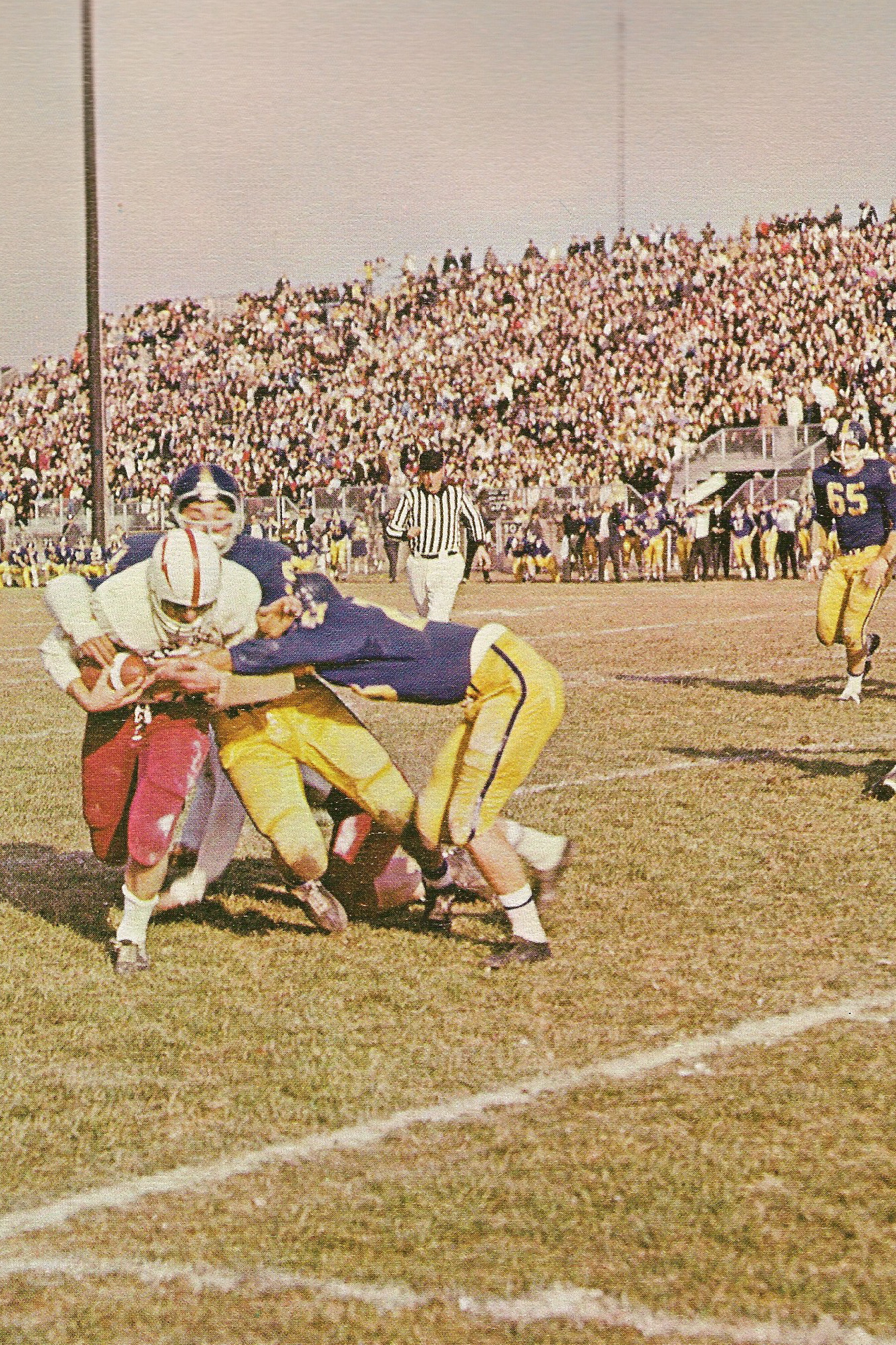
Every Thanksgiving I remember the crisp air, turkey, and football of my youth. There were no league championships or state playoffs. There was something bigger, the Turkey Day game with your arch rival. I remember the cool, sunny, Thanksgiving mornings at the stadium, with my friends. If you had a date you bought her a corsage with school colors. We cheered on our Liberty High School Hurricanes against the William Allen High School Canaries. One of my favorite pictures in my senior year book is of the Turkey Day game. There is Ron Mohap or Ron Kline struggling to break a tackle and cross the goal line. The picture captures everything about the event, the teams, the fans, the sunny, crisp air with the scents of autumn.

My memories are filled with things so often taken for granted–air, sun, autumn, friends, time to play, school, prosperity, food. Dale Pauls wrote a church bulletin article a few years back entitled “98%”. Optimism and pessimism are expressed in the proverb–seeing the glass as half full or half empty. For most of us the issue is not half, rather it is whether we see the glass as 98% full or 2% empty. “It’s just we take the 98% of our life that’s working well completely for granted. And we get fixated on the other 2%.” I get frustrated at the self-check out when this machine tells me I have put an unidentified item in the bag. My frustration builds as I focus on this unreasonable machine of convenience. I take for granted the money I have to buy the groceries, the wonder of having a store with so much food on its shelves, and my wife who is waiting patiently at home to fix my supper. The 2% becomes my focus, not the 98%.

Learning to be thankful for the 98%, to see the 2% in the light of the 98%, this is the challenge for us. Thanksgiving is more than crisp air, turkey, and football. It is more than a national holiday. Thanksgiving is more than a religious duty in prayer. Thanksgiving is an attitude of life. It is the blessed living attentively to their blessings. It is learning to notice the 364 good suppers and to ignore the one burnt piece of chicken. It is learning to see the source of all that is good in our lives. It is learning to see Him who never forsakes us in those tragic times of life that cruelly reverse the percentages. Thanksgiving is thanking God for being God.

Lord, when I was sixteen the crisp air, turkey, football, and all the good of my life were the way things were supposed to be. I took it all for granted. Help me now to notice the daily good and to be grateful. Help me not to take for granted my wife, my family, my friends, the car starting this morning, the bed I sleep in, the church, my ability to walk, and so much more. Lord help me to notice with gratitude the 98% of my life that is full of your blessings. Lord help me to see your continuing love working to bring me through the 2%. More than all of this, Lord help me to live in thanksgiving for the salvation you have given out of the riches of your mercy and love in Jesus Christ.

“Give thanks in all circumstances, for this is God’s will for you in Christ Jesus” (1 Thessalonians 5:18).

Posted in Thanksgiving | Tagged , | 1 Comment

Christmas Gifts for Your Children

PICT1295Children add something so special to this season. I have precious childhood memories of Christmas. How precious are the memories, even more so, of our own children and Christmas. Now the grandchildren. As I reflect on Christmases past and present, I wonder, do we attempt to buy our children’s happiness with gifts quickly forgotten? Do we fail to devote as much joy, expense, and effort in giving the gifts that last a lifetime? So here is my suggested list of gifts for parents to give to their children. A list for grandparents to give to their grandchildren. Give these gifts now and throughout the year. You do not need a check, cash, or plastic to buy them. You simply need all your heart, all your mind, all your soul, and all your strength.

Gift one–LOVE! I know, this is obvious, or is it? Jesus said, “As I have loved you, so you must love one another” (John 13:34). “As I have loved you,” the love seen on the cross. That is what your children need from you. Unselfish–doing what will help your children grow up with self-respect, knowing they are loved, learning to respect others, developing faith in Christ. Love is unselfish. Unconditional–treating your children with kindness and goodness, patience, forgiveness, compassion, humility, without concern as to how pretty or athletic or smart they are. Love is unconditional.

Gift two–RESPECT! You must be aware of the importance of each of your children as individuals. Respect means treating your children with every courtesy and consideration you give to others. They are children. They are not inferior creatures. Children are not your play things or pets. Respect your children. Be considerate of their feelings and their emotions. Do not belittle them. Encourage them.

Gift three–ACCEPTANCE! God’s love is seen in this–“while we were still sinners, Christ died for us” (Romans 5:8). God accepts you where you are, as you are. He patiently bears with you, teaching you, encouraging you, helping you become what you can be. Every child is different. They are different in gender, age, maturity, personality, interests. Every child grows at a different rate physically, mentally, and spiritually. One never gets into trouble. Another gets into trouble all the time. Each one needs to know she is accepted for who she is. “If only you were like your brother!” She is not her brother. She needs you to accept her where she is, as she is. Just as God accepts you.

Gift four–LISTENING! Love, respect, and acceptance, are present or absent in the way you listen to your children. Listen! Get on your child’s eye-level. Listen in order to hear. Listen to understand. Listen to be able to patiently respond. Listen, hear your child’s concerns. Respect his feelings. Listen through. Do not interrupt.

Gift five–TIME! Time with your children. Time–sitting down at the supper table, talking, laughing, listening, not rushing. Time–going on a hike, playing a board game, throwing a ball. Time–as a family working together around the house, playing together, worshiping God together. Time–listening, talking. Time–when you place being with your children ahead of things you would rather be doing. Time–interacting with your children.

Gift six–DISCIPLINE! “The Lord disciplines those he loves, as a father the son he delights in” (Proverbs 3:12). It is easy to see discipline only as punishment. Discipline is much more. Discipline is all that is involved in teaching and guiding your children. Love, respect, acceptance, listening, and time are all part of discipline. The goal of discipline is to lead your children into adulthood as people who are able to make wise choices. The goal is to lead them to living responsibly in relationships with others.

Gift seven–FAITH! The most valuable gift to give your children is faith in Jesus Christ. Read the Bible and Bible stories to them. Pray together. Sing songs of faith. Worship God together. Purposely live a godly life before your children. Be an example of following Christ. Allow your children to see Christ in you.

Lord, help us find these gifts within our hearts. Lord, help us to give them abundantly.

Posted in Christmas, Family, Parenting | Tagged , | 1 Comment